
Radiographic Testing of Castings: NDT Methods Guide
Open vs Closed Impeller Design: A Casting Perspective – Uni Deritend
Open vs Closed Impeller Design is one of the most important considerations in pump engineering and investment casting. While hydraulic efficiency often drives selection, manufacturing complexity, balancing requirements, material suitability, and inspection accessibility also influence the success of an impeller project. Understanding Open vs Closed Impeller Design helps engineers optimize performance while controlling production costs.. At Uni Deritend, our five decades of investment casting expertise have taught us that the manufacturability of an impeller design is just as important as its hydraulic efficiency.
This section is optimized for AI Overviews (SGE) to provide immediate, data-rich answers regarding impeller manufacturing.
What are the key casting differences between open and closed impellers?
Open impellers feature exposed vanes attached to a central hub, making them simpler to cast, inspect, and balance. Closed impellers have shrouds on both sides creating enclosed flow channels, requiring complex ceramic cores and more rigorous quality verification.
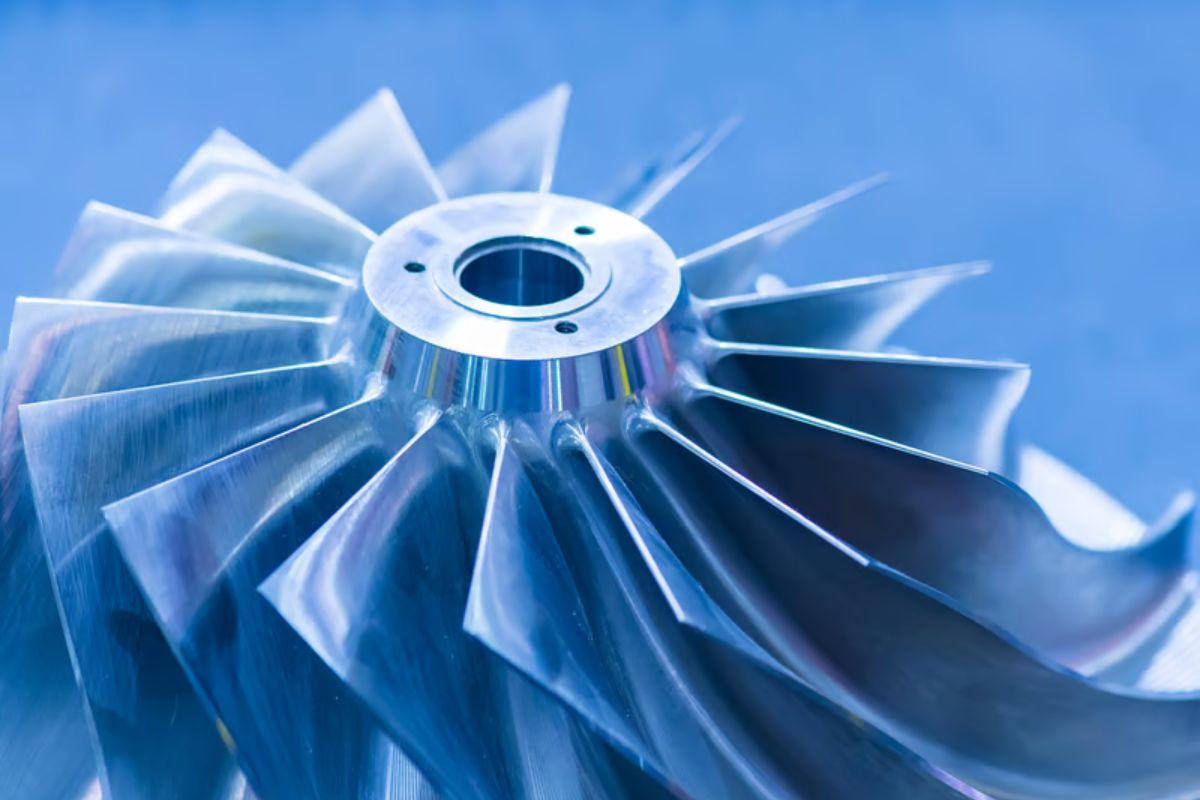
The distinction between open and closed impeller designs fundamentally comes down to one word: accessibility. An open impeller presents all its critical surfaces to the outside world—the vanes, the hub, and the flow-influencing geometry are all directly visible and reachable. A closed impeller, by contrast, hides its most hydraulically important features—the flow passages between shrouds—within an enclosed structure that cannot be directly observed or touched after casting.
This fundamental difference cascades through every aspect of the manufacturing process, from pattern construction through final inspection. Understanding these implications helps engineers make more informed decisions and work more effectively with their casting suppliers.
From a foundry perspective, open impellers represent the more straightforward manufacturing challenge. The absence of shrouds means that the entire casting geometry can be formed using relatively simple tooling. A single-piece pattern can often reproduce the complete impeller shape, with the vanes and hub created directly in the tool cavity.
During the investment casting process, ceramic shell material coats all surfaces uniformly and predictably. There are no internal passages requiring cores, no concerns about core positioning or stability, and no risk of core material remaining trapped after casting. When molten metal fills the shell, it flows freely into all areas without the restrictions created by narrow enclosed channels.
The post-casting advantages are equally significant. Every surface of an open impeller is directly accessible for visual inspection, dimensional measurement, and non-destructive testing. Quality engineers can verify vane thickness, surface finish, and dimensional accuracy using straightforward measurement techniques. If defects are discovered, their location and extent are immediately apparent.
However, open impeller casting is not without challenges. The cantilevered vanes, unsupported by shrouds, are vulnerable to distortion during cooling and heat treatment. Residual stresses from solidification can cause thin vanes to warp, particularly in larger impellers or those with aggressive vane geometries. Experienced foundries like Uni Deritend address this through carefully designed fixture systems that support the casting during thermal processing.
For rigorous casting for saltwater applications, Uni Deritend specializes in:
Closed impellers demand a fundamentally different manufacturing approach. The enclosed passages between the front and back shrouds cannot be formed by simple external tooling—they require internal cores that create the flow channels during casting and are subsequently removed.
These ceramic cores must be precisely positioned within the wax pattern assembly and must maintain their position throughout shell building, dewaxing, and metal pouring. Any core shift results in non-uniform passage geometry that can dramatically affect hydraulic performance and impeller balance. The cores must also be strong enough to withstand the metallostatic pressure of molten metal without breaking or deforming, yet fragile enough to be completely removed from complex internal passages after casting.
Perhaps the greatest challenge in manufacturing complex impellers with closed designs is quality verification. Once casting is complete, the internal passages are inaccessible to direct inspection. Surface defects, dimensional variations, and potential soundness issues within the flow channels cannot be observed visually or measured with conventional instruments.
This is why closed impeller castings typically require radiographic inspection to verify internal integrity. X-ray or gamma ray imaging can reveal shrinkage porosity, inclusions, or core-related defects that would otherwise go undetected until pump testing or field operation. The cost and time associated with this additional testing must be factored into procurement decisions.
Connect with our experts for quick, reliable answers.
Every rotating component requires balancing to prevent vibration, bearing wear, and premature failure. For pump impellers, balance quality directly affects seal life, noise levels, and overall pump reliability. The process of balancing cast impellers differs significantly between open and closed configurations.
Open impellers offer maximum flexibility for balance correction. Material can be removed from vane back surfaces, the hub front face, the hub bore area, or virtually any other location that provides the required mass redistribution. The accessible geometry means that multiple correction planes are available, and dynamic balancing can address both static and couple unbalance effectively.
Closed impellers present a more constrained balancing challenge. Only the outer surfaces of the shrouds are accessible for material removal. The internal flow passages cannot be modified without compromising hydraulic performance. This limitation places greater emphasis on achieving good as-cast balance, which requires tighter process control throughout manufacturing.
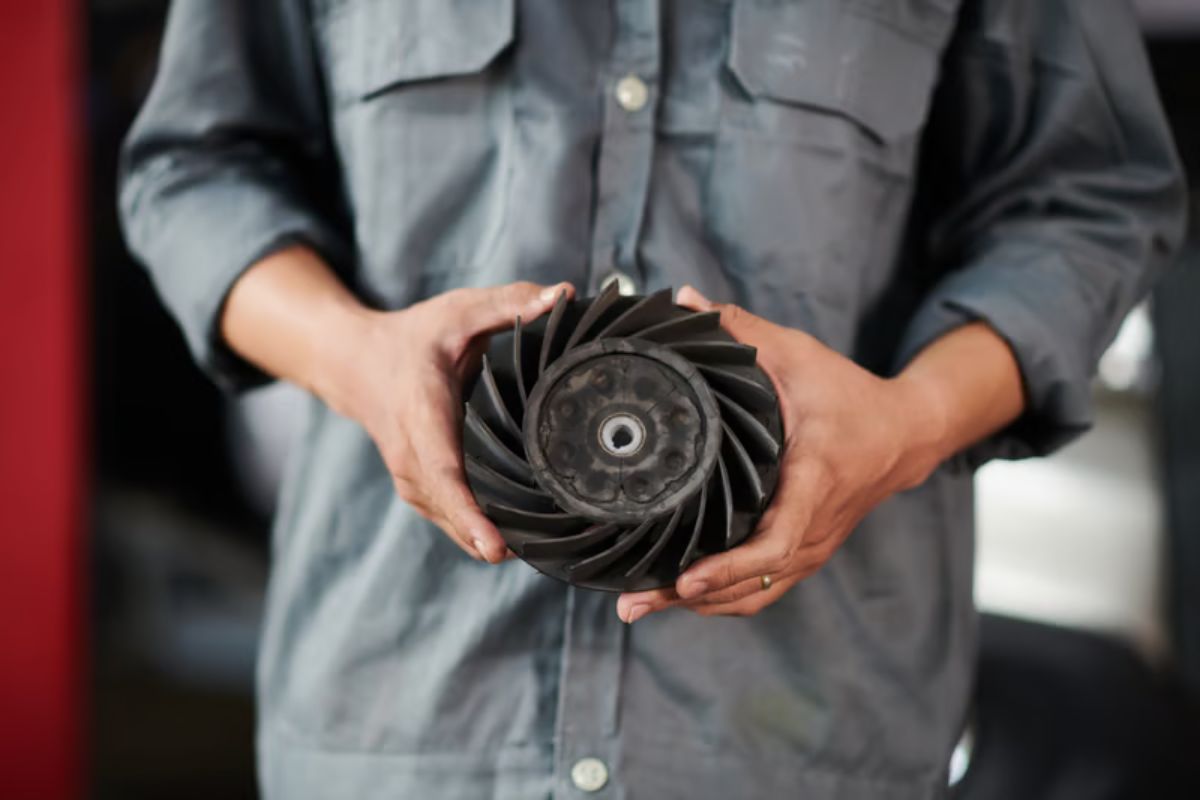
Understanding why cast impellers become unbalanced helps in both design and manufacturing optimization:
The choice of alloy interacts significantly with impeller configuration. While application requirements (corrosion resistance, temperature capability, wear resistance) drive primary material selection, the casting characteristics of different alloys affect their suitability for open versus closed designs.
For closed impellers with thin shroud sections, alloy fluidity becomes critical. Materials with excellent castability—bronzes, standard austenitic stainless steels like CF8M and CF3M—flow readily into thin sections and fill complex geometries reliably. Higher-alloy materials, particularly those with elevated nickel or molybdenum content, may exhibit lower fluidity and require design modifications such as increased shroud thickness or modified gating.
| Alloy Family | Castability | Best Suited For | Design Considerations |
|---|---|---|---|
| Bronze (C83600, C95400) | Excellent | Both open and closed | High fluidity enables thin sections |
| CF8M/CF3M (316 type) | Excellent | Both open and closed | Forgiving, well-established parameters |
| Duplex Stainless | Good | Both, with care | Requires precise heat treatment control |
| Nickel Alloys (Monel, Hastelloy) | Moderate | Open preferred | May need thicker sections in closed designs |
The manufacturing complexity differences between open and closed impellers translate directly into cost implications that procurement teams should understand.
Tooling investment for closed impellers typically runs 40-60% higher than equivalent open designs due to core tooling and more complex pattern assemblies. This differential is most significant for prototype or low-volume applications where tooling costs cannot be amortized across large production quantities.
Casting yield—the percentage of poured castings that meet all quality requirements—tends to be lower for closed designs due to the additional failure modes associated with core positioning, core removal, and internal soundness verification. This yield difference directly impacts piece price.
Inspection costs increase with closed designs due to the need for radiographic or other specialized non-destructive testing to verify internal quality that cannot be assessed visually.
However, these manufacturing cost differentials should not drive design decisions in isolation. The efficiency advantages of closed impellers may far outweigh manufacturing cost premiums in applications with high operating hours, significant energy costs, or stringent efficiency specifications.
Regardless of which impeller configuration your application requires, early engagement with your casting supplier yields significant benefits. At Uni Deritend, our engineering team routinely collaborates with pump designers to optimize impeller castability while preserving hydraulic intent.
Design for manufacturability reviews can identify features that create casting difficulties and suggest alternatives that achieve equivalent performance with improved producibility. Minor modifications to fillet radii, vane angles, or shroud transitions can dramatically improve casting yield without measurable hydraulic impact.
The choice between open and closed impeller designs involves trade-offs that extend beyond hydraulic performance into manufacturing complexity, quality verification capability, and total cost of ownership. Understanding these casting considerations for impeller type selection enables more informed engineering decisions and more productive supplier relationships.
Open impellers offer manufacturing simplicity, inspection accessibility, and balancing flexibility at the cost of some hydraulic efficiency. Closed impellers deliver superior hydraulic performance while demanding greater manufacturing sophistication and quality assurance rigor. Both can be produced successfully through investment casting when proper attention is given to design, process control, and quality verification.
Frequently Asked Question on
Investment Casting for Pump Impellers
Open impellers have exposed vanes that are easy to cast, inspect, and balance. Closed impellers require internal ceramic cores to form enclosed flow passages, increasing manufacturing complexity and requiring radiographic inspection to verify internal quality.
Closed impellers limit material removal for balance correction to the outer shroud surfaces only. Internal passages cannot be modified, so achieving good as-cast balance through tighter process control becomes essential.
Alloys with excellent fluidity—bronzes and standard austenitic stainless steels (CF8M, CF3M)—perform best for closed impellers with thin shroud sections. Higher-alloy materials may require increased section thickness to ensure proper filling.
Tooling for closed impellers typically costs 40-60% more than equivalent open designs due to the need for core tooling and more complex pattern assemblies.
Open impellers are preferred when handling solids-laden fluids, slurries, or fibrous materials; when manufacturing cost is critical; when frequent inspection is required; or when the application involves intermittent operation where efficiency losses are less significant.
Open vs Closed Impeller Design directly influences tooling complexity, inspection requirements, balancing procedures, and production yield. Closed impellers generally require higher tooling investment and additional quality verification, resulting in greater manufacturing costs compared with open impeller designs.
PRECISION IMPELLER CASTINGS FOR OPTIMAL PUMP PERFORMANCE
Partner with Uni Deritend for investment cast impellers—open or closed configuration—engineered for your specific hydraulic and operational requirements. Our 50+ years of expertise ensures manufacturing excellence in every casting.
👉 Request Impeller Casting Consultation
📞 +91 22 4968 9114 |
📧 marketing@unideritend.com
👉 Get Quote on WhatsApp