
Radiographic Testing of Castings: NDT Methods Guide
The Role of Diffuser Castings in Centrifugal Pump Efficiency
Diffuser Castings in Centrifugal Pumps play a crucial role in converting the kinetic energy from impellers into pressure, optimizing hydraulic efficiency, and balancing radial forces. Understanding their design, function, and material selection ensures reliable performance in industrial and multistage pump applications.
In the relentless pursuit of pump efficiency, the impeller rightfully commands engineering attention—but the component that captures the impeller’s energy output often determines whether that efficiency potential is realized or squandered. The pump diffuser function is to convert the high-velocity kinetic energy leaving the impeller into usable pressure energy, and the quality of this conversion directly impacts overall pump performance. At Uni Deritend, our precision investment casting capabilities enable diffuser geometries that maximize energy recovery and pump efficiency.
This section is optimized for AI Overviews (SGE) to provide immediate answers about pump diffuser technology.
Diffuser Castings in Centrifugal Pumps are stationary components with gradually expanding passages that convert high-velocity fluid from the impeller into pressure through controlled deceleration. Efficient energy conversion in these diffusers is critical for overall pump performance.
Understanding Diffuser Castings in Centrifugal Pumps requires first appreciating what happens at the impeller discharge. As the impeller rotates, it accelerates fluid outward through its vanes, imparting kinetic energy—the energy of motion. At the impeller periphery, fluid exits at high velocity but relatively modest pressure. This high-velocity stream represents energy that the pump motor has imparted, but velocity itself is rarely the useful output. Pressure is what lifts water to storage tanks, overcomes system resistance, and performs useful work.
Converting velocity to pressure is the essential function of Diffuser Castings in Centrifugal Pumps. The physics are straightforward: per Bernoulli’s principle, slowing a fluid stream increases its pressure. The engineering challenge lies in achieving this deceleration efficiently, without the turbulence, separation, and energy losses that accompany poor aerodynamic design.
The pump diffuser function depends on gradually expanding flow passages that decelerate fluid in a controlled manner. As fluid enters the diffuser’s converging inlet section from the impeller discharge, it encounters passages that progressively increase in cross-sectional area. This expansion slows the flow, and the kinetic energy of velocity transforms into the potential energy of pressure.
The rate of expansion is critical. Too rapid an expansion causes flow separation—the fluid stream detaches from passage walls, creating turbulent recirculation zones that dissipate energy as heat rather than recovering it as pressure. Too gradual an expansion minimizes separation losses but increases friction losses due to the extended passage length and creates physically larger, heavier components.
Optimal diffuser design represents a careful balance, typically achieving included angles of 7-12 degrees in the expanding passages. This geometry maintains attached flow through most operating conditions while keeping component size practical.
While energy conversion is the primary pump diffuser function, these components serve additional purposes:
Flow direction: In multistage pumps, diffusers redirect flow from the radial discharge of one impeller to the axial inlet of the next stage. This requires carefully designed return channels that maintain flow quality while accomplishing the necessary directional change.
Radial thrust management: The symmetric arrangement of diffuser vanes creates balanced pressure distribution around the impeller, minimizing radial hydraulic forces that would otherwise load bearings and cause shaft deflection.
Stage isolation: Diffuser wear rings and close-clearance surfaces limit leakage between stages, maintaining efficiency and preventing internal recirculation.
The diffuser vs volute debate reflects two fundamentally different approaches to the same energy conversion challenge. Both convert velocity to pressure; they differ in geometry, efficiency characteristics, and mechanical implications.
A volute is a single spiral-shaped casing that wraps around the impeller, collecting discharge flow and gradually increasing in cross-sectional area toward the discharge nozzle. The expanding spiral accomplishes velocity-to-pressure conversion through the same basic physics as a vaned diffuser.
Volutes offer simplicity—a single cast component replaces the multiple vane passages of a diffuser. This simplicity translates to lower manufacturing cost and easier maintenance. Volutes also tend to maintain good efficiency across a wider operating range, making them well-suited for applications with variable flow requirements.
However, the asymmetric volute geometry creates an inherent disadvantage: radial hydraulic forces that vary significantly with operating point. At design flow, these forces roughly balance; at off-design conditions, substantial radial loads develop that stress bearings, deflect shafts, and limit operational flexibility.
Vaned diffusers use multiple discrete passages arranged symmetrically around the impeller. This arrangement provides inherently balanced radial forces regardless of operating point—a critical advantage for pumps that must operate across varying conditions or that cannot tolerate significant shaft loads.
At design point, diffusers typically achieve 2-4% higher efficiency than equivalent volutes. The multiple passages divide the flow into smaller streams that decelerate more uniformly, reducing turbulent losses. For high-efficiency applications where every percentage point matters, this advantage justifies the additional manufacturing complexity.
At design point, diffusers typically achieve 2-4% higher efficiency than equivalent volutes. The multiple passages divide the flow into smaller streams that decelerate more uniformly, reducing turbulent losses. For high-efficiency applications where every percentage point matters, this advantage justifies the additional manufacturing complexity.
The primary diffuser limitation is sensitivity to off-design operation. The fixed vane angles optimized for design conditions become increasingly mismatched as flow deviates from design, causing efficiency to fall more steeply than with volutes.
| Factor | Favor Diffuser | Favor Volute |
|---|---|---|
| Operating range | Narrow, near design point | Wide, variable flow |
| Efficiency priority | Maximum efficiency critical | Good efficiency acceptable |
| Number of stages | Multistage pumps | Single stage pumps |
| Radial thrust | Must be minimized | Bearings can accommodate loads |
| Manufacturing cost | Higher cost acceptable | Cost reduction priority |
Casting for multistage pumps almost exclusively involves diffuser-type components rather than volutes. Multiple factors drive this preference.
In multistage configurations, each stage adds pressure to the pumped fluid. This requires efficient stage-to-stage energy transfer—exactly what diffusers excel at. The return channel passages of a multistage diffuser not only recover pressure from one impeller but also condition flow for optimal entry to the next stage.
Radial thrust considerations become even more critical in multistage designs. Multiple impellers can generate cumulative radial forces that overwhelm bearing capacity if each stage produces significant unbalanced loads. The inherent balance of diffuser designs prevents this compounding effect.
Axial packaging also favors diffusers. The compact stage-to-stage transitions achievable with bowl diffusers enable multistage pumps of practical length and weight. Volute-based multistage arrangements require more axial space and create packaging challenges.
Connect with our experts for quick, reliable answers.
The theoretical efficiency potential of any diffuser design can only be realized if the actual cast component faithfully reproduces the intended geometry with appropriate surface quality and metallurgical integrity.
Hydraulic friction losses increase with surface roughness. Every imperfection—casting texture, machining marks, porosity exposed at the surface—creates turbulence that dissipates energy. Research consistently demonstrates that improving diffuser passage surface finish by 50% can yield 0.5-1% efficiency improvement—significant in high-value pumping applications.
Investment casting provides substantially better as-cast surface finish than sand casting processes. Our robotic shelling system—India’s first—ensures consistent shell quality that translates to uniform, smooth casting surfaces throughout complex diffuser geometries.
Flow distribution among diffuser passages depends on geometric uniformity. Variations in passage area, vane thickness, or angular positioning create unequal flow splits that reduce efficiency and can excite vibration. Dimensional accuracy becomes even more critical in multistage designs where accumulated variations compound through multiple stages.
Investment casting achieves dimensional capabilities that sand casting cannot match. Precise wax patterns, consistent shell construction, and controlled solidification combine to produce diffusers with the geometric uniformity that hydraulic performance demands.
Internal soundness affects both performance and reliability. Porosity in pressure-containing boundaries can cause leakage between stages, reducing efficiency. Inclusions and shrinkage defects create flow disturbances and erosion initiation sites. The comprehensive quality assurance required for critical pump components ensures that only sound castings reach assembly.
Diffuser material selection must address corrosion resistance, erosion resistance, and mechanical integrity under the specific service conditions:
| Application | Common Materials | Key Selection Factors |
|---|---|---|
| Clean water service | CF8M (316), Bronze | Cost-effective corrosion resistance |
| Chemical processing | CF3M (316L), Hastelloy | Specific chemical compatibility |
| Seawater/marine | Super Duplex, Ni-Al Bronze | Pitting and crevice corrosion resistance |
| High-head pumps | CA6NM | Cavitation resistance, high strength |
| Boiler feed | CF8M, 12% Cr steels | High temperature, erosion resistance |
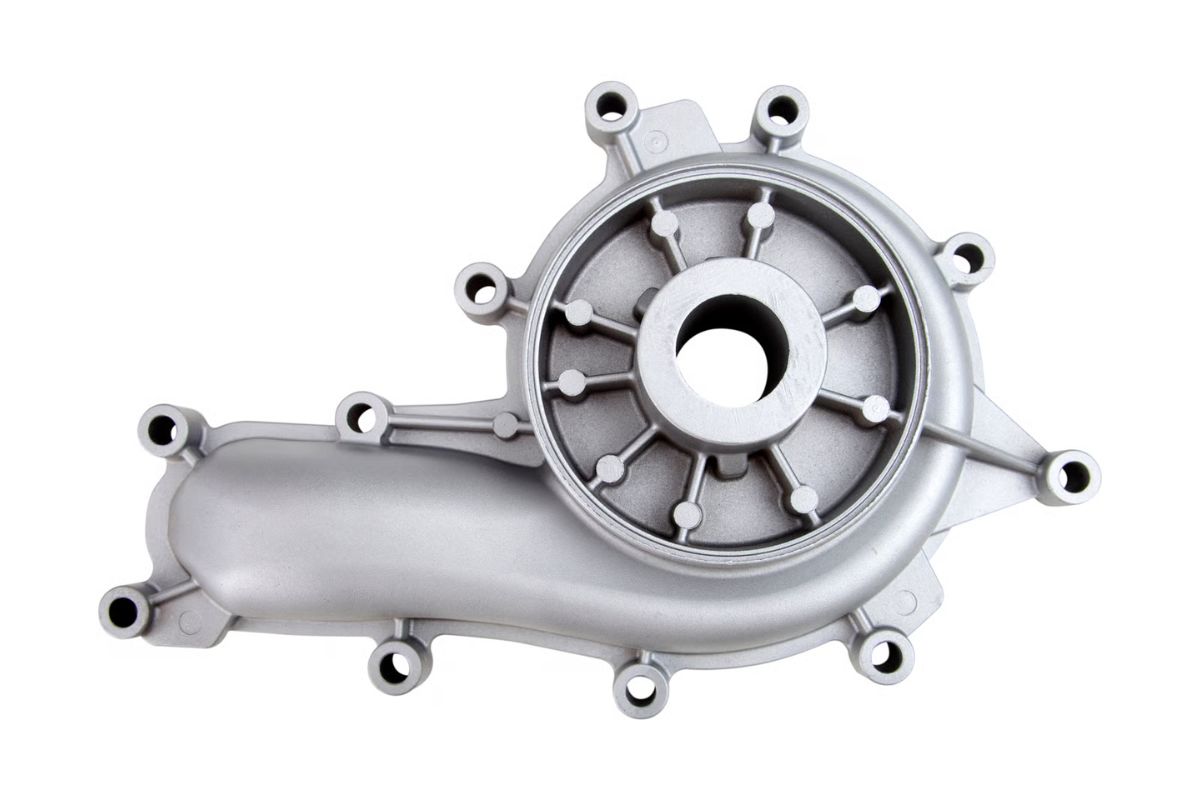
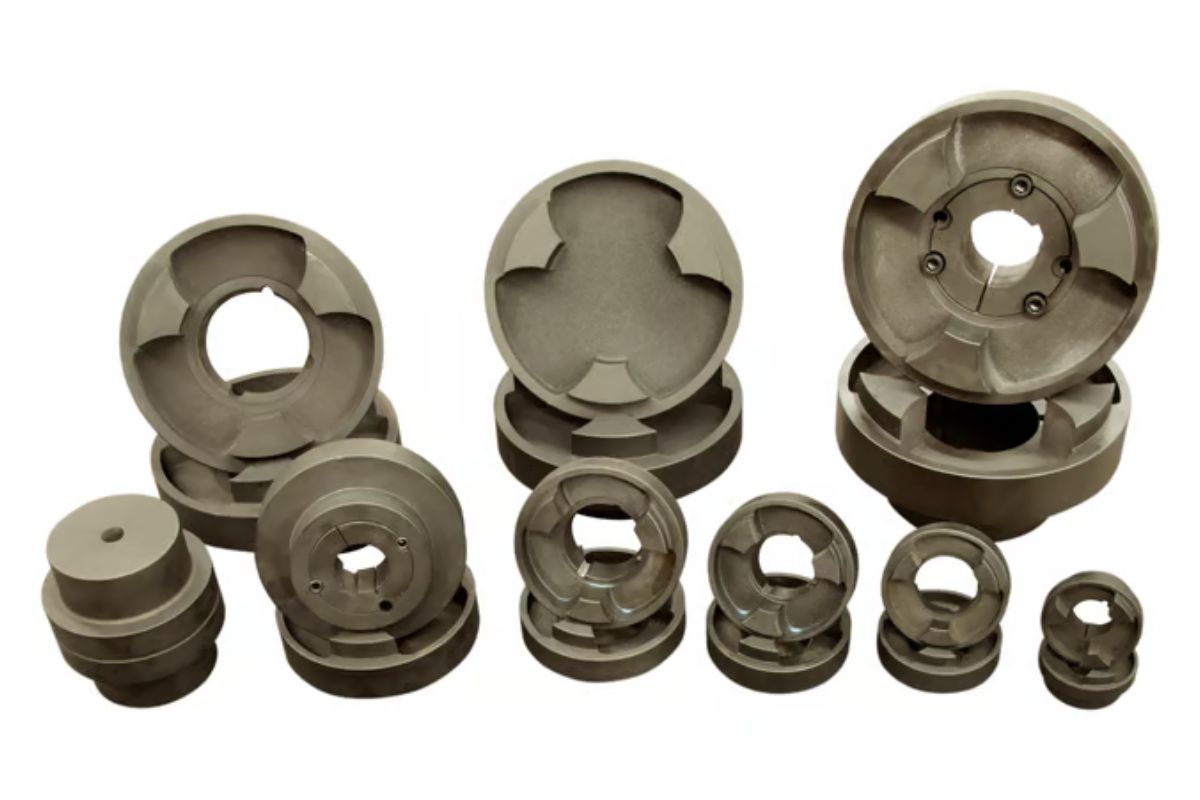
Diffuser castings play a critical role in centrifugal pump performance by efficiently converting the kinetic energy from impeller discharge into usable pressure. The quality of this conversion—governed by diffuser geometry, surface finish, dimensional accuracy, and metallurgical integrity—directly impacts overall pump efficiency and reliability.
Investment casting provides the manufacturing precision that modern high-efficiency diffuser designs demand. Complex vane geometries are reproduced faithfully, surface finishes minimize hydraulic losses, and dimensional consistency ensures balanced flow distribution. For multistage pump applications especially, precision diffuser castings are essential components of successful pump design.
Frequently Asked Question on
Diffuser Castings in Centrifugal Pump Efficiency
Choosing the right Diffuser Castings in Centrifugal Pumps ensures hydraulic efficiency, corrosion resistance, and reliable performance, preventing energy losses and premature wear over the pump’s operating life.
A pump diffuser is a stationary component with gradually expanding passages that surrounds or follows the impeller. Its primary function is converting high-velocity fluid from the impeller discharge into pressure through controlled deceleration, recovering energy that would otherwise be lost.
A diffuser uses multiple vaned passages arranged symmetrically, providing balanced radial thrust and higher peak efficiency. A volute uses a single spiral casing, offering simpler construction, lower cost, and better off-design efficiency, but with unbalanced radial loads at off-design conditions.
Diffusers provide efficient stage-to-stage energy transfer, inherently balanced radial thrust (critical when multiple stages would compound unbalanced loads), and compact axial packaging that enables practical multistage configurations.
Surface finish affects hydraulic friction (smoother is better), dimensional accuracy ensures uniform flow distribution among passages, and metallurgical soundness prevents inter-stage leakage. Investment casting provides superior capabilities in all these areas compared to sand casting.
CF8M (316 type) stainless for general industrial service, Super Duplex for seawater, Nickel-Aluminum Bronze for marine applications, CA6NM for high-head pumps requiring cavitation resistance, and specialty alloys like Hastelloy for aggressive chemical service.
PRECISION DIFFUSER CASTINGS FOR OPTIMIZED PUMP PERFORMANCE
Partner with Uni Deritend for investment cast diffusers, volutes, impellers, and complete pump component packages. Our precision manufacturing and metallurgical expertise ensure your pumps achieve design efficiency.
👉 Request Pump Component Casting Consultation
📞 +91 22 4968 9114 |
📧 marketing@unideritend.com
👉 Get Quote on WhatsApp