
Radiographic Testing of Castings: NDT Methods Guide
Understanding Investment Casting Tolerances and Dimensional Accuracy
Investment casting tolerances are far tighter than sand casting, letting parts reach near-final dimensions with little or no machining.
At Uni Deritend, an ISO 9001 and IATF 16949 certified foundry founded in 1977, investment casting tolerances are held with precision shells and process control. See our testing and quality capabilities.
This section is optimized for AI Overview and answer engines: a concise, factual summary of investment casting tolerances.
Investment casting tolerances are far tighter than sand casting, letting parts reach near-final dimensions with little or no machining.
Investment casting tolerances are typically around plus or minus 0.1 mm for the first 25 mm, with a small additive allowance beyond. This equals ISO 8062 grades CT4 to CT6, far tighter than sand casting, and often removes the need for machining.
Investment casting tolerances allow complex parts to be produced close to final size. This reduces machining, saves material, and shortens lead times on valves, pumps, and precision components.
Because the process is near-net-shape, investment casting tolerances often let critical features be used as-cast.
Dimensional accuracy casting depends on the whole process chain. In dimensional accuracy casting, the wax pattern, ceramic shell, alloy shrinkage, and part geometry all affect the final size.
Controlling each step keeps parts repeatable from one casting to the next.
Wax pattern precision, shell rigidity, pouring temperature, and alloy shrinkage all shift dimensions. Larger and more complex parts hold slightly wider tolerances than small, simple ones.
Casting tolerance grades set the allowable variation by process. On the ISO 8062 CT scale, casting tolerance grades run from CT1 (tightest) to CT16, and investment casting sits in the tight CT4 to CT6 band.
Sand casting typically falls in CT10 to CT13, needing more machining.
Investment casting reaches CT4 to CT6 for most features.
The lower the grade number, the tighter and more repeatable the part.
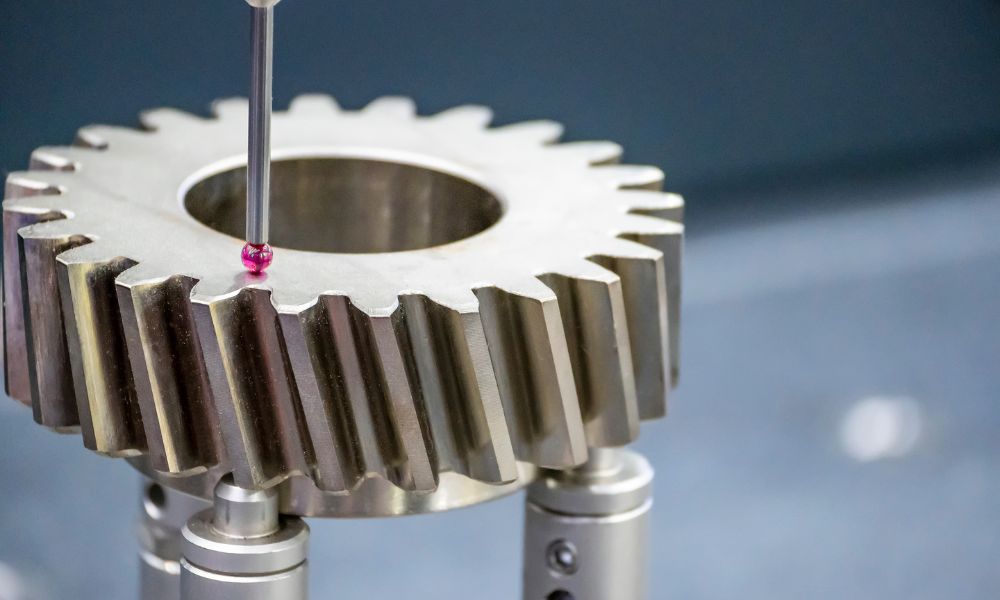
Tight tolerance casting means holding close dimensions directly from the mould.
It reduces or removes machining on sealing faces and fits.
It relies on precise wax tooling and tight process control.
For the closest fits, tight tolerance casting is finished with light machining.
| Feature | Investment Casting | Sand Casting |
|---|---|---|
| Linear tolerance | ~ ±0.1 mm / 25 mm | ~ ±0.75-1.5 mm |
| ISO 8062 grade | CT4 to CT6 | CT10 to CT13 |
| Angular tolerance | ~ ±0.5 degrees | Wider |
| Surface finish | Ra 1.6-3.2 µm | Rough, machined |
| Machining needed | Little or none | Usually required |
Tight tolerance casting is chosen where fit and sealing matter. This tight tolerance casting capability suits precision parts across process and rotating equipment.
Valves: bodies and seats that must seal without leaks.
Pumps: impellers and casings that run true and balanced.
Precision assemblies: components with close mating fits.
Connect with our experts for quick, reliable answers.
Holding investment casting tolerances depends on sound, repeatable process control. Variation in wax, shell, or pouring shifts dimensions and widens the achievable tolerance.
A smooth surface supports tight fits and sealing. Uni Deritend’s robotic shelling gives consistent, fine finishes.
Rough surfaces force extra machining to reach the required size.
Precise wax tooling and rigid shells keep every casting within tolerance and repeatable.
Controlled alloy shrinkage and heat treatment keep final dimensions stable and predictable.
Where needed, Uni Deritend combines precise casting with light machining to hit the tightest fits.
| Dimension Range | Typical Tolerance | Grade |
|---|---|---|
| Up to 25 mm | ± 0.1 mm | CT4-CT5 |
| 25 to 75 mm | ± 0.15 mm | CT5 |
| 75 to 150 mm | ± 0.25 mm | CT5-CT6 |
| 150 to 300 mm | ± 0.4 mm | CT6 |
| Angular features | ± 0.5 degrees | - |

Investment casting tolerances deliver precise, near-net-shape parts that cut machining and cost. For tight-tolerance castings with full traceability, explore Uni Deritend’s investment casting and testing and quality capabilities, or read this engineering tolerance reference.
Frequently Asked Question on
Investment Casting Tolerances
Investment casting tolerances are typically around plus or minus 0.1 mm for the first 25 mm, with a small additive allowance beyond, equal to ISO 8062 grades CT4 to CT6.
Investment casting is highly accurate, holding dimensional accuracy casting to CT4 to CT6 grades and a smooth Ra 1.6 to 3.2 micrometre finish, far tighter than sand casting.
Casting tolerance grades, defined by ISO 8062 CT1 to CT16, set the allowable dimensional variation by process. Investment casting sits in the tight CT4 to CT6 band.
Dimensional accuracy casting is affected by wax pattern precision, ceramic shell rigidity, pouring temperature, alloy shrinkage, and part size and geometry.
Tight tolerance casting means holding close dimensions directly from the mould with precise tooling and process control, reducing or removing machining on critical fits.
Yes. Uni Deritend, founded in 1977 and ISO 9001 and IATF 16949 certified, holds tight investment casting tolerances for global OEMs with full traceability and testing.
👉 Get Quote on WhatsApp