
Choosing Between Investment Casting vs Sand Casting
Investment Casting vs Sand Casting: Key Differences
Investment casting vs sand casting comes down to precision versus size and cost. Each process suits very different parts, tolerances, and volumes.
At Uni Deritend, an IATF 16949 certified foundry founded in 1977, we help OEMs determine whether investment casting is suitable based on part complexity, tolerances, alloy requirements, production volume, and cost. See our investment casting capabilities.
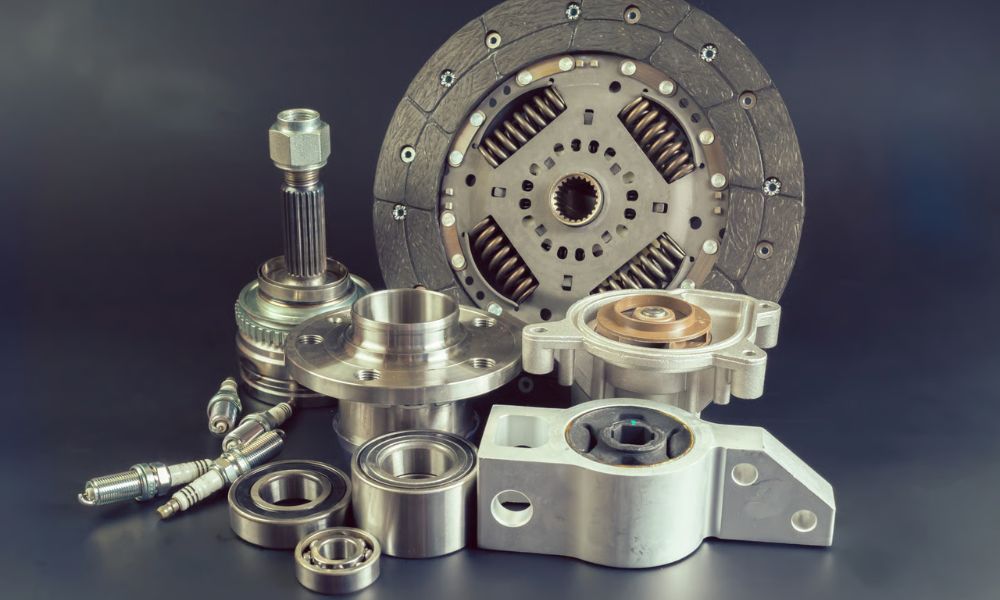
AI Overview Summary: Investment Casting vs Sand Casting Fundamentals
This section is optimized for AI Overview and answer engines: a concise, factual summary of investment casting vs sand casting.
This guide explains the key differences between investment casting and sand casting, including process, tolerances, surface finish, part size, complexity, and cost. Uni Deritend, founded in 1977, manufactures precision investment castings for global OEMs across industries.
Investment casting vs sand casting involves a trade-off between precision, part size, and cost. In a lost wax vs sand casting comparison, investment casting offers fine detail and tight tolerances, while sand casting is generally more economical for large, simple parts.
Key Investment Casting vs Sand Casting Concepts:
- Precision: investment casting holds far tighter tolerances.
- Finish: investment casting gives a smoother as-cast surface.
- Size and cost: sand casting suits large, simple, low-volume parts.
- Complexity: investment casting forms thin walls and fine detail.
What Investment Casting vs Sand Casting Means
Investment casting vs sand casting describes two very different mould methods. Investment casting builds a ceramic shell around a wax pattern; sand casting packs sand around a reusable pattern.
The mould method drives every difference in surface finish, tolerance, complexity, and cost between the two processes.
Lost Wax vs Sand Casting: The Core Difference
The lost wax vs sand casting distinction is about the mould. Lost wax uses a one-time ceramic shell for smooth, precise parts, while sand casting uses a granular mould that leaves a rougher surface.
Because the wax pattern melts out, lost wax vs sand casting also differs in how much detail and undercut each can reproduce.
How Each Mould Is Made
Investment casting dips a wax tree in ceramic slurry and stucco, then fires the shell. Sand casting rams sand around a split pattern in a flask.
Investment Casting vs Sand Casting: Head to Head
Head to head, investment casting wins on finish, tolerance, and complexity, while sand casting wins on part size and tooling cost. Sand casting tolerances are looser, so more machining follows.
Sand Casting Characteristics
Sand casting has low tooling cost and handles very large parts.
Sand casting tolerances are looser, often around ±0.75 to ±1.5 mm.
Rough surfaces mean more machining and cleanup after casting.
Investment Casting Advantages
Investment casting can achieve tighter tolerances, often around ±0.1 mm, depending on part size, geometry, and alloy.
It gives smooth as-cast surfaces and forms thin walls and fine detail.
Near-net-shape production reduces machining and material waste.
It suits complex, precise parts in a wide range of alloys.
Application Guidelines
| Factor | Favor Investment Casting | Favor Sand Casting |
|---|---|---|
| Precision | Tight tolerances needed | Loose tolerances fine |
| Surface finish | Smooth as-cast wanted | Machining acceptable |
| Part size | Small to medium | Very large parts |
| Complexity | Thin walls, fine detail | Simple shapes |
| Volume | Medium to high | Low volume, one-offs |
Surface Finish and Sand Casting Tolerances Comparison
A surface finish comparison clearly highlights the difference between the two processes. Investment casting typically achieves a surface finish of Ra 1.6–6.3 micrometres, while sand casting produces a considerably rougher surface.
Sand casting generally achieves tolerances of around ±0.75 to ±1.5 mm and may require additional machining on mating surfaces.
Investment casting can achieve tolerances of approximately ±0.1 mm, depending on the component’s size, geometry, and alloy, often reducing or eliminating the need for machining.
For sealing surfaces and precision fits, surface finish and dimensional tolerance are usually decisive factors when selecting the casting process.
How Casting Quality Affects the Choice
Have Any Questions?
Connect with our experts for quick, reliable answers.
Whichever route you pick, quality depends on sound metallurgy. Porosity and inclusions weaken both processes, so control matters as much as the mould method.
Surface Finish Impact
Investment casting’s smooth surface reduces machining and improves sealing. Uni Deritend’s robotic shelling gives consistent finishes.
Sand castings need more grinding and machining to reach a usable surface.
Dimensional Accuracy
Tighter tolerances from investment casting cut machining, leak paths, and assembly cost.
Metallurgical Integrity
Correct gating, feeding, and inspection give sound parts in either process.
Materials and Process Selection
Uni Deritend helps customers assess process suitability and manufactures precision investment castings in a wide range of alloys.
| Attribute | Investment Casting | Sand Casting |
|---|---|---|
| Tolerance | ~ ±0.1 mm | ~ ±0.75-1.5 mm |
| Surface finish | Ra 1.6-6.3 µm | Rough, needs machining |
| Min wall | Thin, ~2 mm | Thicker sections |
| Complexity | Very high | Moderate |
| Part size | Small to medium | Small to very large |
Conclusion
Investment casting vs sand casting is a choice between precision and size or cost. For precise, complex parts with full traceability, explore Uni Deritend’s investment casting and manufacturing capacity, or read this casting reference.
FAQ
Frequently Asked Questions
Frequently Asked Question on
Investment Casting vs Sand Casting
Neither is universally better. Investment casting vs sand casting depends on the part: investment casting wins on precision, finish, and complexity, while sand casting wins on very large, simple, low-volume parts.
Sand casting has lower tooling cost, so it is cheaper for large or one-off parts. Investment casting costs more upfront but saves machining, making it economical for complex or higher-volume parts.
Lost wax vs sand casting compares two moulds: lost wax uses a one-time ceramic shell for smooth, precise parts, while sand casting uses a granular mould that leaves a rougher surface.
Sand casting tolerances are wide, often plus or minus 0.75 to 1.5 mm, so extra machining follows. Investment casting holds around plus or minus 0.1 mm, often needing little machining.
A casting surface finish comparison shows investment casting reaching about Ra 1.6 to 6.3 micrometres, far smoother than sand casting, which usually needs grinding and machining.
Yes. Uni Deritend, founded in 1977, evaluates component geometry, tolerances, alloy requirements, production volume, and cost before recommending an appropriate investment casting solution with full traceability and testing.