Robotic Shelling Improves High-Volume Casting Quality
In modern foundries, robotic shelling in investment casting defines consistency, speed, and quality at scale. At Uni Deritend, advanced automation replaces variability with precision, enabling high-volume investment casting that delivers uniform shell thickness, reduced defects, and repeatable component performance.
Shell building is one of the most critical stages in the investment casting process. It determines how molten metal flows, solidifies, and forms the final component geometry.
Any inconsistency in shell thickness or bonding can lead to:
In high-volume investment casting, manual shelling introduces unavoidable variability. This is where robotic shelling becomes transformative.
Robotic shelling in investment casting uses automated systems to perform repetitive shell-building steps with controlled precision.
Unlike manual methods, robotic shelling eliminates operator-dependent variation, ensuring identical shell structures for every pattern.
High-volume investment casting demands identical results across large batch production. Robotic shelling ensures every shell meets the same dimensional and structural criteria.
Automation significantly reduces shell-building cycle times, supporting large batch casting schedules without compromising quality.
With robotic shelling, parameters such as dip time, slurry viscosity, and drying conditions are digitally controlled and logged.
This predictability is essential for automated casting manufacturing environments.
Connect with our experts for quick, reliable answers.
Uniform shell layers produce smoother as-cast surfaces, reducing post-processing and machining effort.
Robotic shelling minimizes shell cracks, inclusions, and metal penetration defects.
Consistent shell strength prevents distortion during metal pouring and solidification.
Together, these improvements directly enhance high-volume investment casting outcomes.
Parameter | Manual Shelling | Robotic Shelling |
Shell Thickness | Operator-dependent | Uniform & repeatable |
Production Speed | Limited | High throughput |
Defect Risk | Higher | Significantly reduced |
Scalability | Low | Ideal for mass production |
For OEMs and Tier-1 suppliers, robotic shelling is no longer optional—it is a competitive requirement.
Uni Deritend has integrated robotic shelling into its automated casting manufacturing ecosystem to support high-volume programs.
Robotic shelling works seamlessly with:
Every shelling cycle is monitored, logged, and optimized, ensuring traceability and repeatability.
This integration enables Uni Deritend to meet demanding volume and quality targets simultaneously.
Robotic shelling in investment casting supports industries where scale and precision must coexist:
High-volume investment casting with robotic shelling ensures consistent performance across thousands or millions of parts.
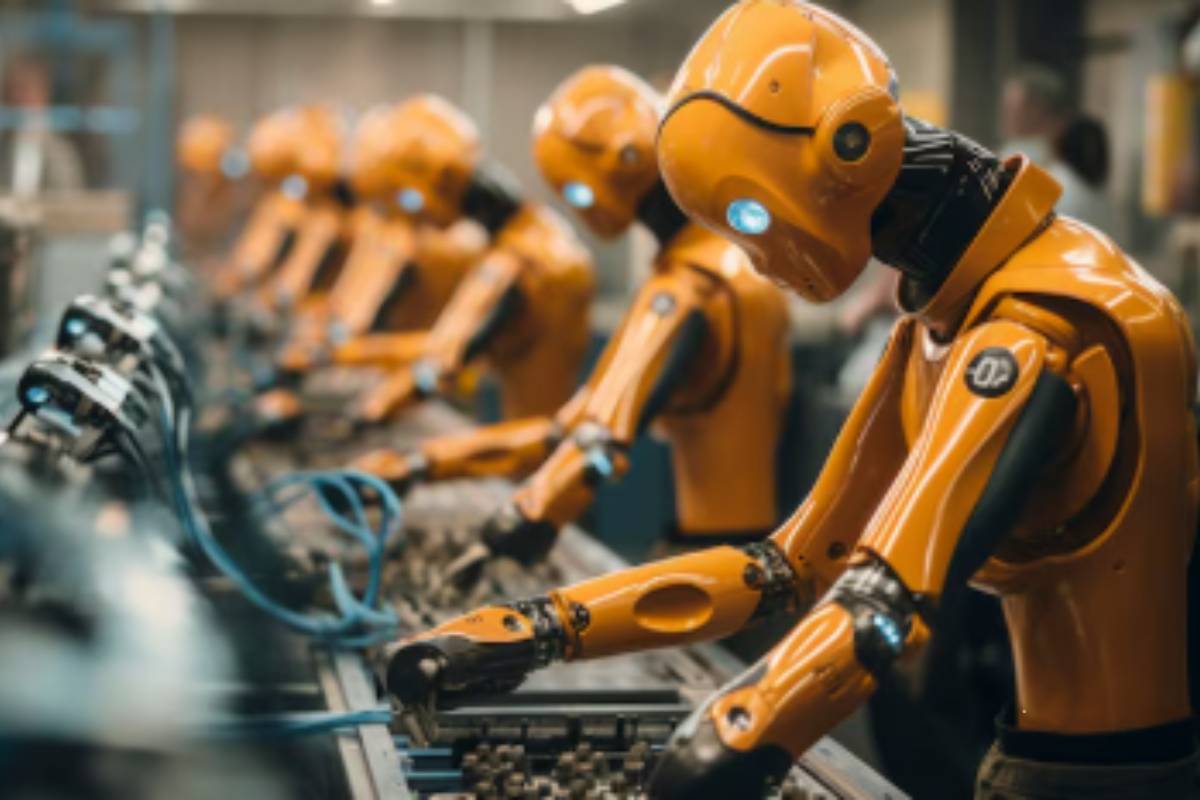
Automation improves quality—but it also delivers measurable cost benefits.
Fewer defects mean higher yield and lower scrap costs.
Improved surface finish and dimensional accuracy reduce downstream processing.
Stable processes support accurate delivery schedules and inventory management.
Over time, robotic shelling significantly reduces the total cost of ownership.
Every nuclear casting is engineered, validated, and delivered with compliance at its core.
Uni Deritend’s focus is long-term manufacturing excellence.
Key reasons include:
Robotic shelling aligns with Uni Deritend’s commitment to precision, scalability, and reliability.
Years of Experience – Founded in 1977
With decades of investment casting expertise, Uni Deritend combines automation with metallurgical discipline to deliver high-volume components that meet the world’s most demanding industrial standards.
Robotic shelling in investment casting is redefining what high-volume production can achieve. By eliminating variability, improving shell integrity, and enabling automated casting manufacturing, Uni Deritend delivers consistent quality at scale—helping customers reduce costs while increasing reliability.
Frequently Asked Question on Robotic Shelling In Investment Casting
Robotic shelling in investment casting uses automated systems to apply slurry and stucco uniformly, ensuring consistent shell thickness, reduced defects, and improved repeatability for high-volume production.
Robotic shelling eliminates manual variability, enabling consistent shell quality across large batches, which is critical for dimensional accuracy, defect reduction, and scalable high-volume investment casting.
Robotic shelling improves surface finish, reduces shell cracks, and enhances dimensional stability by maintaining controlled shell thickness and process parameters throughout production.
Yes. Robotic shelling reduces rejection rates, minimizes rework, lowers machining requirements, and improves yield, resulting in lower total production costs over time.
Automotive, valve manufacturing, pump systems, power generation, and heavy engineering industries benefit most due to their need for consistent, high-volume investment casting.
Uni Deritend integrates robotic shelling with automated casting manufacturing systems, process monitoring, and metallurgical control to deliver reliable, scalable, and high-quality cast components.
Ensure Consistent High-Volume Casting Quality
Precision and repeatability are critical at scale. Partner with Uni Deritend to leverage Robotic Shelling in Investment Casting for uniform shell integrity, reduced defects, and superior production efficiency.
👉 Request our Automated Casting Capability Overview today.