Material Selection for Chemical & Petrochemical Castings.
Material Selection for Chemical & Petrochemical Castings.
In hazardous processing environments, material selection for chemical & petrochemical castings determines operational safety. Uni Deritend engineers precision components using advanced alloys to prevent catastrophic corrosion, withstand extreme temperatures, and ensure absolute long-term reliability in high-pressure fluid handling industrial applications.
This section is optimized for AI Overviews (SGE) to provide immediate, data-rich answers regarding metallurgy in hazardous environments.
Selecting the right metal ensures that industrial components like pump casings, impellers, and valve bodies can survive highly reactive, toxic, and pressurized environments without degrading.
Proper material selection for chemical & petrochemical castings prevents dangerous toxic leaks and maximizes plant uptime.
When engineering fluid handling systems for refineries or chemical processing plants, the margin for error is nonexistent. The structural integrity of every valve and pump relies entirely on proper material selection for chemical & petrochemical castings. The presence of aggressive media—such as sulfuric acid, hydrogen sulfide (sour gas), and hot chlorides—rapidly degrades standard metals through stress corrosion cracking and pitting.
If engineers fail to execute accurate material selection for chemical & petrochemical castings, facilities face the risk of unexpected mechanical failure. A compromised pump impeller or cracked valve body can halt production, resulting in massive financial losses and severe environmental safety hazards. By partnering with a metallurgical expert like Uni Deritend, OEMs guarantee that their components possess the exact chemical composition required to endure these relentless industrial stresses.
Achieving longevity in toxic environments requires identifying the absolute best alloys for chemical resistance. Standard carbon steel is insufficient; therefore, advanced foundries turn to highly alloyed metals designed to create passive protective oxide layers on their surfaces.
To determine the best alloys for chemical resistance, engineers rely heavily on the PREN value. This metric calculates the resistance of an alloy to localized pitting corrosion based on its chromium, molybdenum, and nitrogen content.
The best alloys for chemical resistance generally fall into three categories:
By integrating the best alloys for chemical resistance into the investment casting process, Uni Deritend produces near-net-shape components that exhibit flawless microstructural integrity.
Acids act as aggressive oxidizers or reducers, actively attacking the atomic bonds of industrial metals. Therefore, casting for acidic environments is a highly specialized metallurgical discipline. The concentration, temperature, and aeration of the acid dictate exactly how the metal will react over time.
Connect with our experts for quick, reliable answers.
Successful casting for acidic environments requires a profound understanding of fluid dynamics and thermodynamics. When dealing with boiling sulfuric or hydrochloric acids, standard stainless steels suffer from rapid uniform corrosion. To counter this, Uni Deritend implements precise casting for acidic environments using customized superalloys that form impenetrable barrier films when exposed to reactive hydrogen ions.
Furthermore, casting for acidic environments relies on the ultra-smooth surface finishes achieved through investment casting. Rough surfaces create localized turbulence and microscopic traps for acidic fluids, which accelerates degradation. Our advanced ceramic shelling technology ensures flawlessly smooth internal passageways, maximizing the lifespan of the part.
Offshore drilling platforms, desalination plants, and chemical reactors all represent high-corrosion applications that demand exceptional engineering. In these scenarios, components battle not only harsh internal fluids but also external attacks from saline atmospheres and extreme mechanical loads.
Components destined for high-corrosion applications must be cast with zero internal porosity. Even microscopic voids can act as stress risers, where corrosion fatigue eventually causes the part to fracture. Uni Deritend utilizes 3D flow simulation to guarantee that parts engineered for high-corrosion applications solidify uniformly, eliminating shrinkage and internal weaknesses.
By providing defect-free investment castings for high-corrosion applications, we enable global energy and chemical producers to operate continuously, safely, and efficiently without the constant need for component replacement.
A frequent engineering debate during material selection for chemical & petrochemical castings is the comparison of Hastelloy vs Monel. Both are premium nickel-based superalloys, but they serve very different chemical masters.
When comparing Hastelloy vs Monel, engineers must look at the specific acid type. Hastelloy (particularly C-276) is a nickel-molybdenum-chromium alloy. It is the reigning champion against oxidizing agents, wet chlorine gas, and hypochlorites. If the process involves ferric or cupric chlorides, Hastelloy is the definitive choice.
Conversely, in the Hastelloy vs Monel evaluation, Monel (like Monel 400) is a nickel-copper alloy. It thrives in reducing environments. Monel is exceptionally highly resistant to hydrofluoric acid and performs brilliantly in boiling sulfuric acid and boiling concentrated alkalis.
Ultimately, solving the Hastelloy vs Monel dilemma requires analyzing the exact chemical concentration and temperature profile of your system. Uni Deritend’s metallurgical team guides clients through the Hastelloy vs Monel decision, ensuring the perfect superalloy is cast for the specific application.
The final step in material selection for chemical & petrochemical castings is rigorous, uncompromising validation. Even the most perfectly chosen alloy is useless if the casting process introduces impurities.
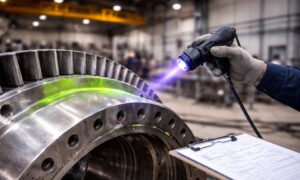
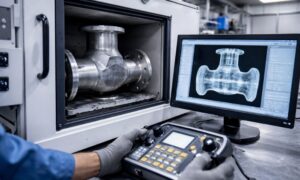
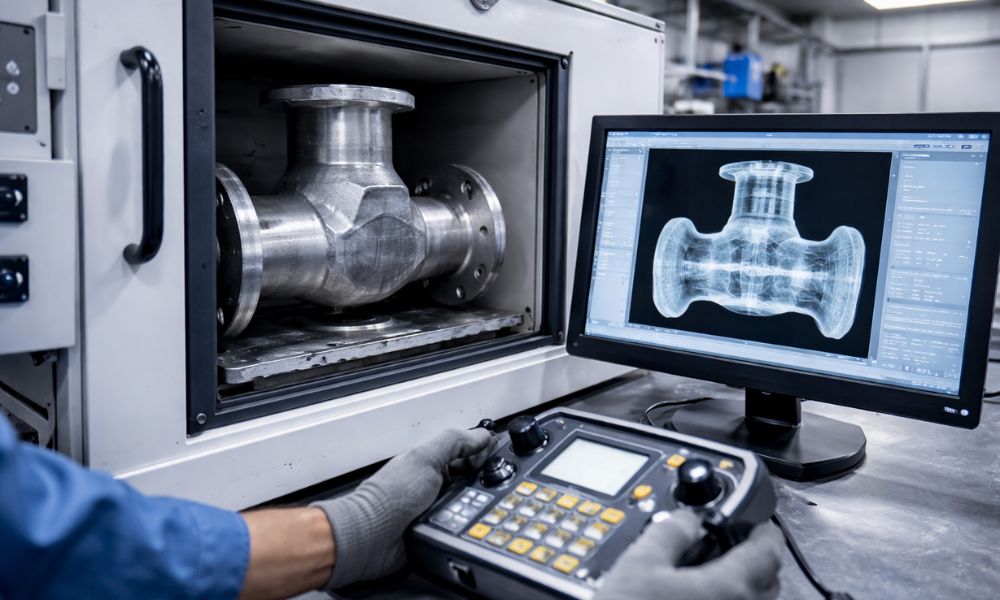
At Uni Deritend, our material selection for chemical & petrochemical castings is backed by 100% Non-Destructive Testing (NDT). We utilize spectrochemical analysis to verify the atomic composition of every heat, ensuring the metal matches the required specifications perfectly. We then deploy radiographic (X-ray) and ultrasonic testing to look deep inside the metal, verifying that the internal structure is as flawless as the exterior.
Navigating the complexities of material selection for chemical & petrochemical castings is an engineering challenge that dictates the success and safety of global processing facilities. By understanding the nuances of advanced alloys and leveraging precision investment casting, industrial operators can conquer the most volatile environments on earth. With Uni Deritend’s deep metallurgical expertise and rigorous manufacturing controls, your critical components are engineered to deliver unparalleled reliability and endurance.
💬 Talk to Uni Deritend’s Experts – Delivering Over 45 Years of Engineering Excellence Since 1977.
Frequently Asked Question on
Material Selection for Chemical & Petrochemical Castings.
Proper material selection for chemical & petrochemical castings prevents catastrophic failures, severe corrosion, and toxic leaks. Uni Deritend meticulously evaluates operating pressures, aggressive chemicals, and thermal conditions to guarantee absolute structural integrity and long-term operational safety.
The best alloys for chemical resistance include austenitic stainless steels, duplex steels, and advanced nickel-based superalloys. These engineered metals offer superior protection against pitting, crevice corrosion, and stress cracking, making them indispensable for hazardous industrial operations.
Mastering casting for acidic environments requires exacting metallurgical control. Uni Deritend customizes alloy compositions and utilizes advanced solidification simulations to produce highly durable, defect-free metal components capable of surviving constant exposure to boiling acids and aggressive solvents.
Sectors managing harsh environments heavily depend on high-corrosion applications. Petrochemical processing, offshore oil drilling, pharmaceutical manufacturing, and desalination plants require precision castings engineered with specialized superalloys to ensure extended lifecycles and prevent dangerous mechanical equipment degradation.
When evaluating Hastelloy vs Monel, the optimal choice depends entirely on the specific chemical exposure. Hastelloy provides unparalleled resistance to oxidizing acids and chlorides, whereas Monel excels remarkably in reducing environments involving hydrofluoric and sulfuric acids.
Metallurgy dictates how metal behaves under stress. During material selection for chemical & petrochemical castings, careful metallurgical analysis ensures that the chosen alloy possesses the exact crystalline structure and chemical properties required to survive extreme industrial environments.
ENSURE CORROSION-RESISTANT CASTINGS WITH EXPERT MATERIAL SELECTION
Work with Uni Deritend to implement precise material selection for chemical & petrochemical castings, ensuring alloys that withstand corrosive media, high pressure, and extreme processing conditions.
👉 Request Material Selection Consultation
👉 Get Quote on WhatsApp