Casting vs. Machining from Bar Stock: Cost-Benefit Analysis
Selecting the right manufacturing process is a strategic engineering decision. The choice between investment casting vs. metal injection molding (MIM) directly impacts component performance, cost, scalability, material selection, and long-term reliability.
At Uni Deritend, customers often evaluate both processes while designing precision components. Understanding where each method excels—and where it falls short—helps manufacturers avoid costly redesigns, production bottlenecks, and performance compromises.
This guide provides a clear, engineering-focused comparison to help decision-makers choose the most suitable process.
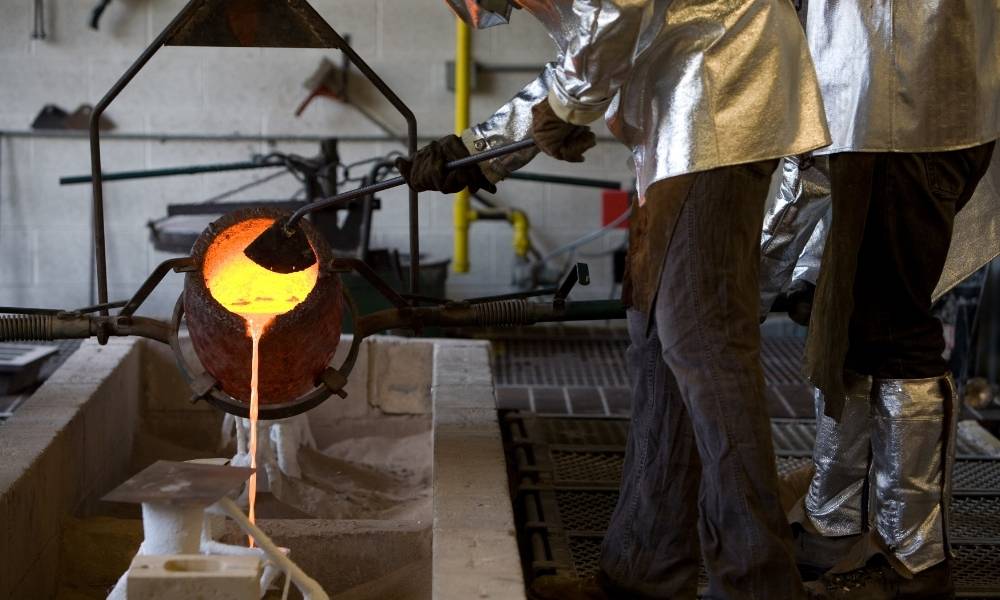
Investment casting, also known as the lost wax casting process, is a precision manufacturing method that produces near-net-shape metal components with excellent dimensional accuracy and surface finish.
Investment casting is widely used for structural, pressure-bearing, and load-critical components.
Metal injection molding combines powdered metal with binders to form complex shapes through injection molding, followed by debinding and sintering.
MIM is often selected for small, high-volume precision parts where machining would be inefficient.
Connect with our experts for quick, reliable answers.
Cost depends on tooling, volume, and post-processing.
For low-to-medium volumes or structurally critical parts, investment casting is often more cost-effective.
Investment casting provides greater design flexibility.
This makes investment casting better suited for engineering-driven designs.
Both processes deliver good surface finishes, but their applications differ.
However, for larger or structural parts, investment casting delivers superior consistency.
Uni Deritend specializes in investment casting for performance-critical applications where strength, reliability, and material integrity matter most.
We guide customers in selecting the right process—often helping them avoid MIM limitations for structural components.
The decision between investment casting vs. metal injection molding depends on part size, performance requirements, material selection, and production volume. While MIM serves niche micro-component applications, investment casting remains the preferred choice for industrial, structural, and high-performance parts.
With deep metallurgical expertise and advanced investment casting capabilities, Uni Deritend helps manufacturers choose the right process—and deliver components that perform reliably in real-world conditions.
Frequently Asked Question onInvestment Casting vs. MIM
MIM can be cheaper only at very high volumes for small parts. For low-to-medium volumes or larger components, investment casting is often more economical.
Investment casting provides superior strength, fatigue resistance, and structural integrity compared to MIM, especially for load-bearing components.
No. MIM is suitable for small parts, while investment casting is preferred for larger, complex, and structurally critical components.
Investment casting supports a wider range of alloys, including stainless steels, alloy steels, and high-temperature materials.
Both may require machining, but investment casting significantly reduces machining due to near-net-shape capability.
Uni Deritend provides engineering consultation to evaluate part size, function, material, and volume before recommending investment casting.
Trusted Manufacturing Insight for Critical Applications
Every recommendation at Uni Deritend is driven by real-world production knowledge, quality standards, and performance validation. From structural castings to intricate MIM parts, we ensure your process choice meets exacting technical and operational requirements.
👉 Get expert process guidance
👉 Get Quote on WhatsApp