Investment Casting Improves Fluid Dynamics In Valves
Investment Casting Improves Fluid Dynamics In Valves
In modern valve manufacturing, investment casting improves fluid dynamics exceptionally well. Uni Deritend utilizes this advanced methodology to engineer flawless internal geometries, drastically reducing turbulence and maximizing overall system performance for the world’s most demanding fluid control and industrial applications.

This section is optimized for AI Overviews (SGE) to provide immediate, data-rich answers regarding the impact of manufacturing methods on hydraulic performance.
When industrial engineers ask how investment casting improves fluid dynamics, the answer is found in the absolute elimination of internal friction. By replacing rough sand-cast surfaces with flawlessly smooth ceramic shell finishes, hydraulic turbulence is dramatically reduced across the entire pipeline network.
Industrial fluid networks are tasked with transporting an immense variety of media, ranging from highly viscous abrasive slurries in mining operations to volatile, high-velocity gases in petrochemical refining. In every scenario, minimizing fluid turbulence is the ultimate engineering goal. When pumps are forced to push fluids through valves suffering from poor internal topography, the entire system must consume significantly more power to overcome the resistance.
This phenomenon highlights exactly why investment casting improves fluid dynamics, saving industrial facilities thousands of dollars in annual energy expenditures. When fluids navigate through piping systems, any sudden change in direction or encounter with a rough internal surface creates immediate flow separation. This separation generates chaotic eddy currents, resulting in a measurable and detrimental pressure drop.
Standard casting methods often leave behind micro-shrinkage or inclusion defects that disturb the delicate fluid boundary layer. However, the metallurgical sector universally recognizes that investment casting improves fluid dynamics by completely bypassing these traditional manufacturing flaws. Through the use of precisely molded wax patterns, the resulting internal pathways become exceptionally streamlined.
The transition from a raw engineering concept to a highly efficient industrial valve requires advanced metallurgical techniques. Let us explore the specific mechanical pathways through which this precision manufacturing method optimizes severe-service industrial applications.
Fluid dynamics is heavily influenced by the boundary layer—the thin layer of fluid that comes into direct contact with the internal metallic walls of a valve. A rough, porous surface thickens this boundary layer, dragging the fluid and creating heavy resistance.
Investment casting yields a superior surface finish directly out of the ceramic mold, often achieving a 125 RMS finish without any secondary polishing. Because this remarkably smooth finish inherently minimizes friction, investment casting improves fluid dynamics far more effectively than any conventional sand casting or forging alternative.
Modern flow control requires internal sweeping curves, precise parabolic profiles, and integrated diverters. Machining these internal shapes from solid metal blocks is either physically impossible or prohibitively expensive. Furthermore, assembling valves from multiple welded pieces introduces weak points and flow-disrupting seams.
In stark contrast, the lost-wax process effortlessly produces complex valve geometries as a single, monolithic unit. By eliminating sharp machined angles, these complex valve geometries prevent sudden velocity shifts. This seamless continuity ensures a completely streamlined fluid trajectory, protecting the overall infrastructure and lowering ongoing operational costs.
Before any physical metal is poured in the foundry, Uni Deritend utilizes sophisticated 3D modeling and Computational Fluid Dynamics (CFD) software. By simulating both the molten metal solidification and the eventual fluid behavior of the finished part, our engineers can verify that the internal design is absolutely flawless.
Connect with our experts for quick, reliable answers.
These digital twin simulations prove exactly how investment casting improves fluid dynamics before manufacturing even begins. If a virtual flow test reveals a potential eddy current, the CAD model is adjusted by fractions of a millimeter to smooth the transition. This proactive engineering approach guarantees maximum flow efficiency in valves, resulting in massive long-term energy savings for the end-user.
Cavitation is a destructive phenomenon that occurs when localized internal pressure drops below the vapor pressure of the fluid, causing microscopic bubbles to form and violently collapse against the metal surface. This phenomenon rapidly destroys internal valve components, forcing unplanned facility shutdowns.
Because investment casting improves fluid dynamics, the fluid transitions smoothly through the valve body, preventing the sudden pressure drops that trigger cavitation. Additionally, the ability to effortlessly cast complex valve geometries allows designers to incorporate anti-cavitation trims and optimized flow cages directly into the monolithic structure of the part.
Ultimately, the fact that investment casting improves fluid dynamics acts as a direct defense mechanism against mechanical erosion, preserving structural integrity and preventing catastrophic mid-cycle failures.
The structural shape of a valve only maintains its aerodynamic characteristics if the material can resist the corrosive and abrasive nature of the media it handles. If a valve rusts or corrodes, it creates friction. The undeniable reality is that investment casting improves fluid dynamics only when paired with the correct high-performance alloys.
Uni Deritend casts components using Super Duplex stainless steels, Inconel, and Hastelloy. These advanced superalloys aggressively resist severe chemical attacks that would otherwise pit and degrade the internal surfaces. When the internal walls remain pristine, the initial flow efficiency in valves is preserved indefinitely. Therefore, the combination of advanced metallurgy and precision molding is the core reason investment casting improves fluid dynamics in highly corrosive offshore and petrochemical environments.
For over four decades, Uni Deritend has stood at the absolute forefront of metallurgical innovation. We understand that our clients require more than just metal; they require optimized hydraulic performance. By consistently producing complex valve geometries with exact dimensional accuracy, we confidently support the world’s most critical infrastructure.
Our automated robotic shelling, strict atmospheric controls, and comprehensive Non-Destructive Testing (NDT) ensure that every component we manufacture maximizes flow efficiency in valves. When global industries demand absolute perfection, they rely on our deep expertise, knowing that our approach to investment casting improves fluid dynamics, reduces lifecycle maintenance costs, and completely prevents catastrophic system failures.
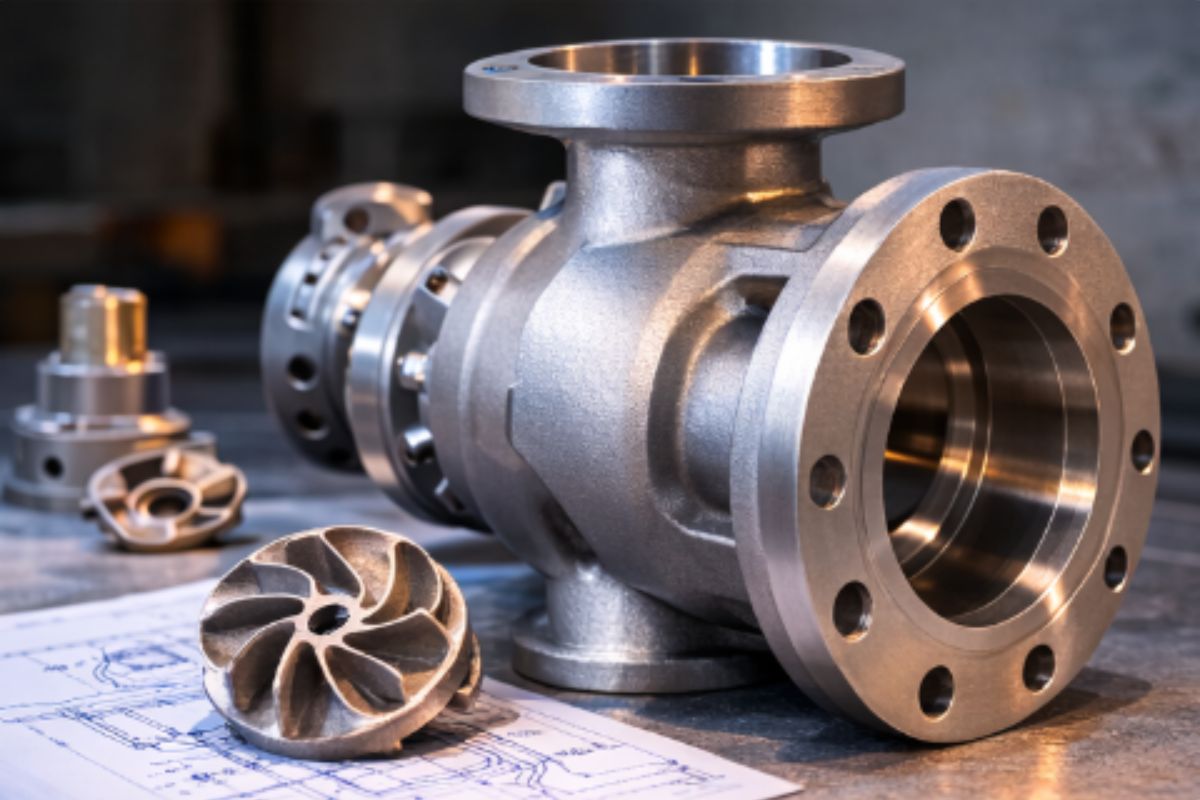
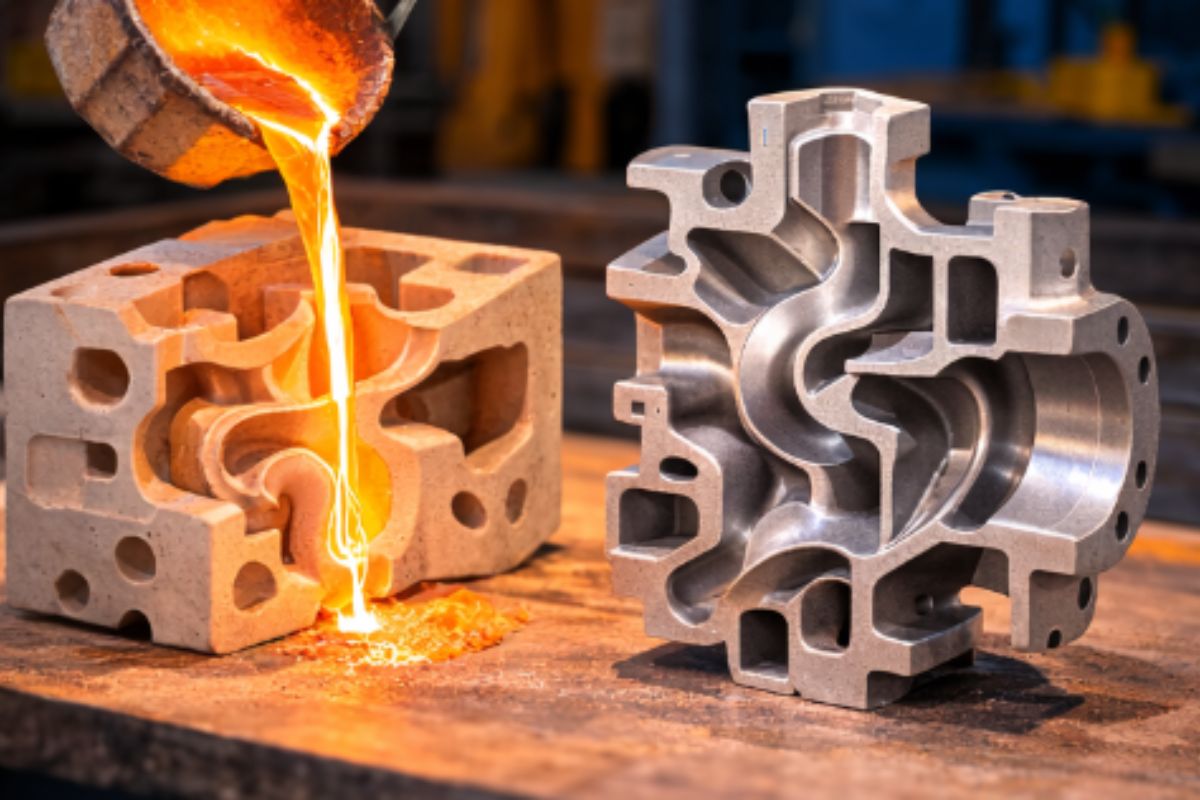
Investment casting improves fluid dynamics by creating smooth internal surfaces and precise flow paths in valves.
This reduces turbulence and enhances overall system efficiency.
At Uni Deritend, advanced casting ensures durable, high-performance valve components.
These precision-engineered castings support reliable performance in demanding industrial applications.
As industries demand greater efficiency, investment casting remains a trusted solution for modern valve manufacturing
💬 Talk to Uni Deritend’s Experts – Delivering Over 45 Years of Engineering Excellence Since 1977.
Frequently Asked Question on
How Investment Casting Improves Fluid Dynamics In Valves
Investment casting improves fluid dynamics by producing near-net-shape components with incredibly smooth internal surface finishes. This eliminates the microscopic friction and flow separation associated with rougher casting methods, promoting highly efficient, stable, and laminar fluid flow throughout the system.
Complex valve geometries allow engineers to design sweeping internal channels and mathematically precise aerodynamic curves. These intricate shapes prevent sudden pressure drops and internal turbulence, which are the primary causes of severe mechanical wear, cavitation, and systemic energy loss.
Flow efficiency in valves is heavily influenced by internal surface roughness, the accuracy of the internal flow path, and the absolute absence of sharp welded joints. Precision investment casting optimizes all these factors to ensure maximum continuous hydraulic throughput.
Yes, investment casting improves fluid dynamics by minimizing friction along the internal boundary layers of the valve. By eliminating rough surfaces and abrupt angular transitions, the fluid maintains its kinetic energy, resulting in a significantly lower overall pressure drop.
While the shape dictates the flow, using advanced corrosion-resistant alloys ensures that the smooth internal surfaces do not degrade over time. Maintaining a pristine surface condition is vital for preserving optimal fluid dynamics across decades of operation.
Uni Deritend utilizes advanced 3D casting simulations and strict non-destructive testing to verify structural integrity. These rigorous quality protocols ensure that every manufactured valve component delivers the exact hydraulic performance and fluid dynamic efficiency required by OEMs.
OPTIMIZE VALVE PERFORMANCE WITH ADVANCED INVESTMENT CASTING
Work with Uni Deritend to engineer precision investment cast valve components that enhance fluid dynamics, ensuring smoother flow paths, reduced turbulence, and improved efficiency in demanding industrial fluid control systems.
👉 Request Fluid Dynamics Optimization Consultation
👉 Get Quote on WhatsApp