Casting Porosity and Shrinkage Defects: Causes & Fixes
At Uni Deritend, precision begins with intelligent design. Our comprehensive investment casting design guidelines for engineers help optimize component geometry, significantly reduce the need for secondary machining, and ultimately improve performance. By strictly following these established investment casting design guidelines for engineers, we leverage near-net-shape techniques, advanced CAD simulations, and deep material science principles to ensure manufacturing excellence and cost-effectiveness. Adherence to our robust investment casting design guidelines for engineers helps transform complex specifications into high-performance, production-ready components.
Investment casting transforms complex engineering concepts into high-performance components—but only when design precision leads the way.
Utilizing accurate investment casting design guidelines for engineers is not just about producing a part; it’s about optimizing its structural integrity and minimizing post-casting finishing. Adherence to these strict investment casting design guidelines for engineers prevents costly errors and ensures the part functions as intended under stress.
Uni Deritend partners with engineers early in the design cycle , ensuring manufacturability and accuracy through digital prototyping, simulation, and metallurgical insight, which are all key components of comprehensive investment casting design guidelines for engineers provided by Uni Deritend.
Connect with our experts for quick, reliable answers.
Step 1 – CAD for Investment Casting
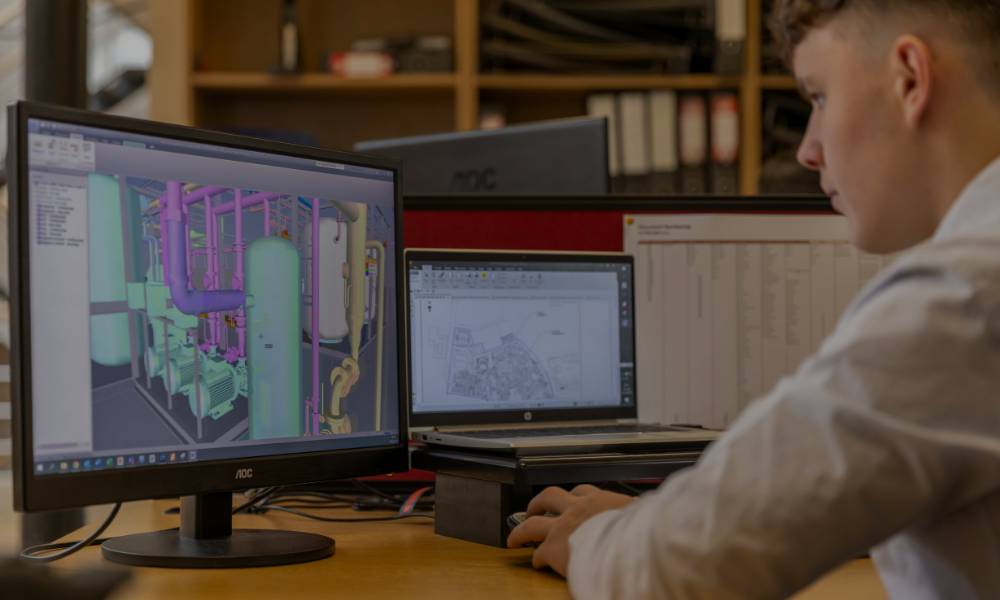
A solid CAD model is the foundation of investment casting design. It allows engineers to visualize every dimensional feature and predict shrinkage, draft angles, and gating feasibility before physical production begins.
Step 2 – Design for Casting Efficiency
Casting-friendly design minimizes post-machining and material waste. We recommend:
Step 3 – Near Net Shape Casting Design
Our near-net-shape casting design principles help engineers create geometries closer to the final form, reducing machining time by 30–40% while maintaining dimensional precision.
Step 4 – Understanding Investment Casting Tolerances
Dimensional precision in investment casting follows ISO 8062 standards. Typical tolerances:
By considering these tolerances during CAD design, engineers can improve dimensional consistency and assembly compatibility.
Designing thin walls is one of the biggest challenges in investment casting.
Key Guidelines:
At Uni Deritend, advanced simulation tools visualize metal flow and thermal gradients, helping engineers optimize designs to prevent misruns or shrinkage defects.
Avoiding errors in the early design phase ensures better yield and shorter lead times.
Typical Issues
At Uni Deritend, design is inseparable from metallurgy. Our engineers analyze alloy solidification, cooling rates, and the effects of heat treatment on component geometry. This cross-disciplinary approach minimizes distortion and improves mechanical performance.
Alloys such as SS 316, Inconel 625, and duplex stainless steel are selected according to application-specific mechanical and environmental requirements.
Together, these capabilities help move each design efficiently from concept to final casting.
Efficient design not only improves performance but also promotes sustainability. By reducing excess metal use and machining, Uni Deritend’s approach saves resources and minimizes energy consumption — supporting eco-friendly manufacturing standards.
Frequently Asked Question on Investment Casting Design Guidelines for Engineers
Design determines casting feasibility, quality, and cost. A well-engineered design ensures proper metal flow, eliminates defects, and minimizes machining, delivering superior precision and efficiency.
Always use draft angles, uniform wall thickness, and proper fillets. CAD simulations at Uni Deritend help identify potential flow or shrinkage issues early in the design phase.
Near-net-shape design minimizes machining by producing components close to their final form, saving time, cost, and material while maintaining dimensional precision.
Walls as thin as 1.5 mm are achievable, depending on alloy flow characteristics and geometry, when supported by advanced simulation and controlled pouring techniques.
Our engineers collaborate during CAD and simulation stages, providing design feedback, flow analysis, and metallurgical insights to ensure reliable, manufacturable geometries.
Typical tolerances range from ±0.2 mm for linear dimensions to ±0.5° angular, following ISO 8062 standards, ensuring perfect fit and functionality.
Partner with Uni Deritend – Founded in 1977,to transform your concept into a precision-engineered casting through design innovation, metallurgical expertise, and manufacturing excellence.
👉 Get Quote on WhatsApp