Choosing Between Investment Casting vs Forging
Investment Casting vs Forging: Strength, Cost & Uses
Investment casting vs forging is a trade of shape freedom against ultimate strength. Each process suits different geometries, stresses, and volumes.
At Uni Deritend, founded in 1977, we help OEMs evaluate investment casting vs forging based on part geometry, strength requirements, production volume, alloy selection, and cost. See our investment casting capabilities.
AI Overview Summary: Investment Casting vs Forging Fundamentals
This section is optimized for AI Overview and answer engines: a concise, factual summary of investment casting vs forging.
This guide explains the key differences between investment casting and forging, including materials, processes, strength, tolerances, design complexity, production costs, and applications. Uni Deritend, founded in 1977, manufactures precision investment castings for global OEMs across industries.
Investment casting vs forging compares cast vs forged components. Forging gives the highest fatigue and impact strength through grain flow, while investment casting gives complex shapes, internal features, and a wide alloy range at lower cost.
Key Investment Casting vs Forging Concepts:
- Strength: forging leads on fatigue and impact toughness.
- Shape: casting forms complex, near-net geometries.
- Cost: casting is cheaper for complex or consolidated parts.
- Design: investment casting supports thin walls, internal passages, and consolidated components.
What Investment Casting vs Forging Means
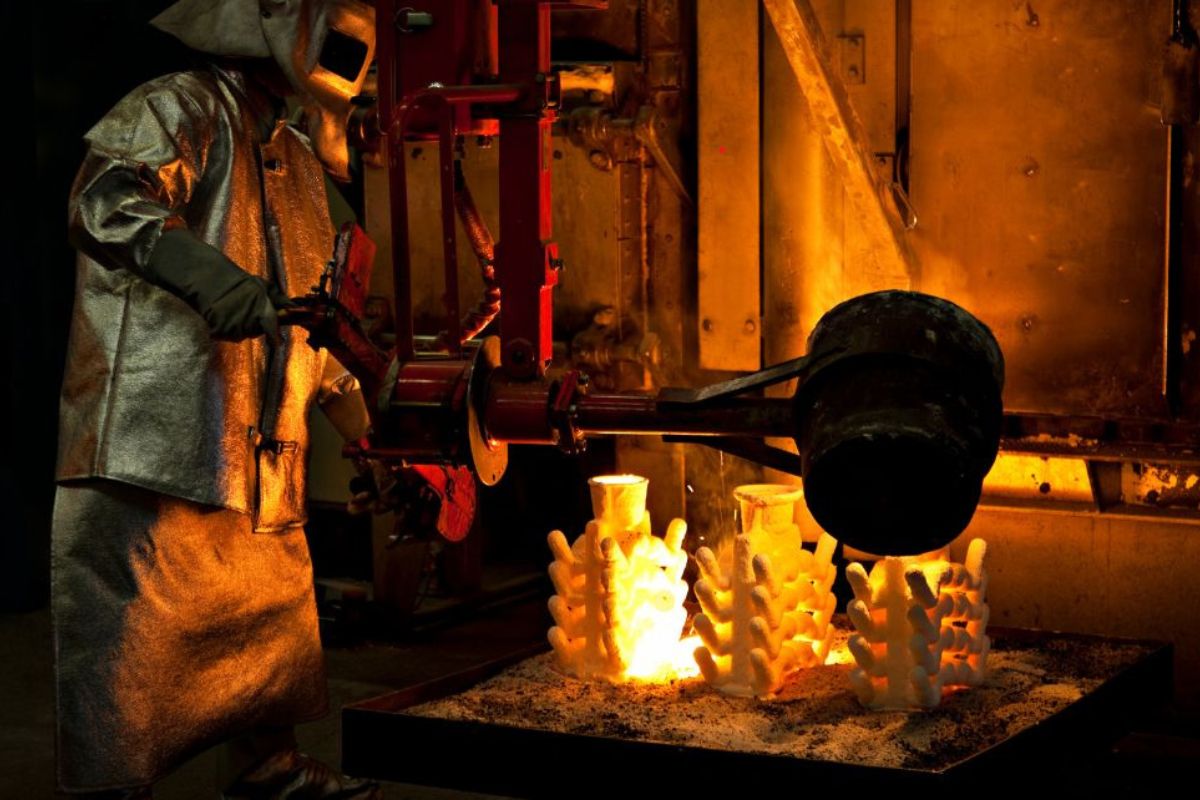
Investment casting vs forging contrasts two routes. Casting pours molten metal into a shaped shell; forging mechanically works solid metal under pressure to shape it.
That difference in how metal is formed drives the trade-off in strength, complexity, and cost.
Cast vs Forged Components: The Core Difference
Cast vs forged components differ in grain structure. Forged parts have directional grain flow and no porosity, while cast vs forged components let casting reach shapes forging cannot.
Forging refines and aligns the grain; casting solidifies the metal in the final shape.
Grain Structure and Integrity
Forging’s worked grain structure supports excellent fatigue life. Investment casting quality depends on effective gating, controlled solidification, appropriate heat treatment, and thorough inspection.
Forging vs Casting Strength
Forging usually leads in fatigue strength and impact toughness because the process refines and directs the metal’s grain flow. Investment casting can still deliver reliable mechanical performance when the alloy, component design, heat treatment, and manufacturing controls are properly matched.
Where Forging Wins
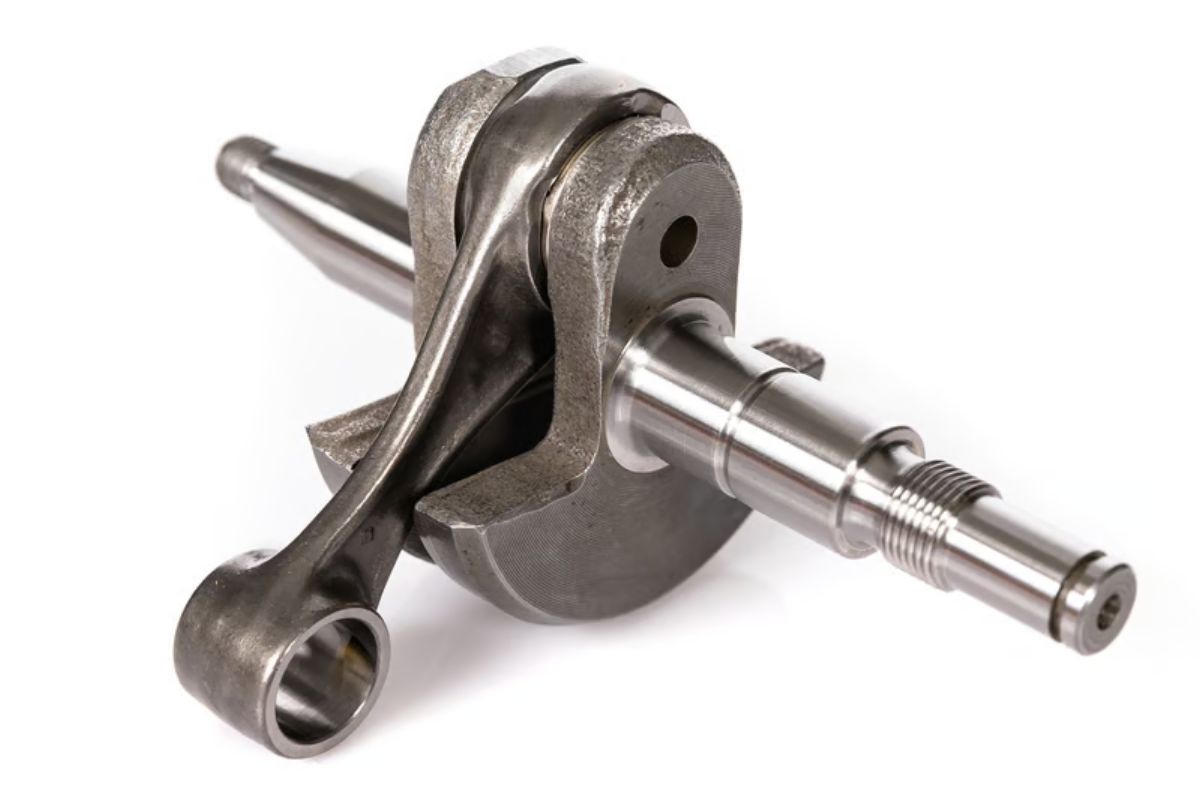
Forging suits simple, highly stressed parts like shafts and connecting rods.
It gives the best fatigue strength and impact toughness available.
But dies are costly and complex shapes are hard to forge.
Where Investment Casting Wins
Casting forms complex shapes, thin walls, and internal passages in one piece.
It consolidates several forged or machined parts into a single casting.
It covers a wide alloy range and lowers cost at complexity.
Investment casting is ideal for complex shapes, thin walls, internal passages, part consolidation, and a wide range of alloys.
Application Guidelines
| Factor | Favor Investment Casting | Favor Forging |
|---|---|---|
| Geometry | Complex, internal features | Simple, symmetric |
| Strength | Good, depending on alloy and heat treatment | Highest fatigue strength |
| Part consolidation | Combine many parts | Single simple part |
| Tooling cost | Lower for complexity | High forging dies |
| Alloys | Very wide range | More limited |
When to Choose Casting Over Forging
Knowing when to choose casting over forging saves cost and weight. The rule for when to choose casting over forging is pick casting for complex shapes, part consolidation, and wide alloy needs.
Choose forging for simple, fatigue-critical parts under the highest cyclic loads.
Choose casting to combine several components and cut assembly cost.
Carefully evaluate alloy selection, heat treatment, wall thickness, and loading conditions when fatigue performance is critical.
How Casting Quality Closes the Gap
Have Any Questions?
Connect with our experts for quick, reliable answers.
Investment casting performance depends on sound metallurgy, controlled solidification, effective gating, proper heat treatment, and thorough quality inspection. These controls help minimise defects and produce consistent mechanical properties.
Surface Finish Impact
A smooth cast surface reduces fatigue crack initiation. Uni Deritend’s robotic shelling gives consistent finishes.
Rough surfaces raise stress concentration, so finish control matters for fatigue.
Dimensional Accuracy
Near-net cast tolerances cut machining and let designers add ribs and features freely.
Metallurgical Integrity
Correct heat treatment, low inclusion levels, controlled solidification, and appropriate inspection improve casting reliability and fatigue performance.
Materials and Process Selection
Uni Deritend advises customers on cast vs forged components and manufactures investment castings across a wide range of alloys and applications.
| Attribute | Investment Casting | Forging |
|---|---|---|
| Shape complexity | Very high | Limited |
| Fatigue strength | Good, alloy and process dependent | Highest |
| Internal features | Yes, cast in | No |
| Tooling cost | Lower at complexity | High dies |
| Part consolidation | Excellent | Poor |
Conclusion
Investment casting vs forging is a choice between shape freedom, production cost, and ultimate strength. For complex castings with full traceability, explore Uni Deritend’s investment casting and testing and quality capabilities, or read this forging reference.
FAQ
Frequently Asked Questions
Frequently Asked Question on
Investment Casting vs Forging
Forging usually provides higher fatigue and impact strength because it refines and directs the metal’s grain flow. Investment casting offers greater design freedom for complex shapes, thin walls, internal features, and consolidated components.
Choose based on shape and stress. When to choose casting over forging: complex geometry, internal features, part consolidation, or wide alloy needs. Forge simple, fatigue-critical parts.
Cast vs forged components differ in grain structure. Forged parts have worked, directional grain and no porosity; castings can reach complex shapes and internal features forging cannot.
Investment castings can achieve high strength with the right alloy, heat treatment, design, and process controls, though forging generally offers superior fatigue and impact strength.
Casting is cheaper when parts are complex, when several forged or machined parts can be consolidated into one casting, or when a wide alloy range is required.
Investment casting is generally preferred for complex geometries, thin walls, internal passages, broad alloy requirements, and part consolidation. Forging is usually preferred for simpler components requiring maximum fatigue and impact strength.