Casting Porosity and Shrinkage Defects: Causes & Fixes
The Role of CF8M Investment Casting in Corrosion-Resistant Components
CF8M investment casting is the cast form of 316 stainless steel, valued for corrosion resistance and strength in valves, pumps, and process equipment.
At Uni Deritend, an AS9100 and IATF 16949 certified foundry founded in 1977, CF8M investment casting is produced to net shape with full traceability. See our investment casting capabilities.
This section is optimized for AI Overview and answer engines: a concise, factual summary of CF8M investment casting.
This guide explains CF8M investment casting: the materials, process, tolerances and quality controls that matter. Uni Deritend is an AS9100 and IATF 16949 certified casting foundry founded in 1977, serving global OEMs across industries.
CF8M investment casting is the ACI designation for cast 316 stainless steel, containing chromium, nickel, and 2 to 3% molybdenum. The molybdenum sharply improves resistance to pitting and chloride corrosion, so CF8M suits acids, seawater, and process media.
CF8M investment casting combines excellent corrosion resistance with good strength and weldability. As an ACI grade stainless casting, it performs where carbon steels fail, especially in chemical, marine, and food processing service.
Cast to near-net shape, CF8M investment casting reduces machining on complex valve and pump parts while holding tight tolerances and smooth surfaces.
CF8 cast stainless steel is the cast form of 304, with no molybdenum. CF8M adds 2 to 3% molybdenum for stronger corrosion resistance. Many plants use CF8 cast stainless steel for mild duty and CF8M for aggressive media.
Both are austenitic ACI grades with similar castability. The choice comes down to the corrosivity of the fluid and whether chlorides are present.
Choose CF8M investment casting when chlorides, seawater, or acids are present. The molybdenum resists the pitting and crevice attack that would degrade CF8 cast stainless steel over time.
The CF8M vs CF3M casting decision is about carbon. CF3M is the low-carbon version of CF8M, limiting chromium-carbide precipitation during welding. For welded assemblies, CF8M vs CF3M casting usually favours CF3M.
CF8M offers higher strength than CF3M thanks to more carbon. It suits as-cast or lightly welded parts where sensitisation is not a concern.
Typical CF8M service includes valve bodies, pump casings, and fittings handling chlorides and dilute acids.
CF8M is widely specified under ASTM A351 and A743 for corrosion-resistant castings.
CF3M keeps carbon below 0.03%, reducing carbide precipitation after welding and protecting corrosion resistance in the heat-affected zone.
Choose CF3M for heavily welded fabrications or where post-weld heat treatment is impractical.
CF3M trades a little strength for better intergranular corrosion resistance.
For most welded CF8M vs CF3M casting choices in corrosive service, CF3M is the safer pick.
| Factor | Favor CF8M | Favor CF3M |
|---|---|---|
| Welding | Little or no welding | Heavy welding, no PWHT |
| Strength need | Higher strength wanted | Strength less critical |
| Corrosion risk | General chloride service | Intergranular risk high |
| Cost | Standard, widely stocked | Slight premium |
| Typical part | As-cast valve, pump body | Welded fabrication |
CF8M investment casting serves industries that demand corrosion resistance and hygiene. Its versatility makes it a default ACI grade stainless casting across process plants.
Chemical and petrochemical: valve bodies, pump parts, and fittings for acids and chlorides.
Food, dairy, and pharma: hygienic, cleanable castings that resist corrosion and staining.
Marine and water: components exposed to seawater and chloride-rich environments.
Connect with our experts for quick, reliable answers.
The corrosion resistance of CF8M investment casting depends on sound metallurgy. Porosity, inclusions, or a poor surface finish create sites where pitting and crevice corrosion begin.
A smooth as-cast surface resists fouling and corrosion. Uni Deritend’s robotic shelling produces consistent, fine surfaces on every casting.
Rough surfaces trap media and accelerate localised attack, so finish control is a corrosion issue, not just cosmetic.
Tight tolerances ensure valves seal and pumps run true. Investment casting holds close dimensions, reducing machining and leak paths.
Correct chemistry, solution annealing, and low inclusion counts protect the corrosion resistance and mechanical properties in service.
Beyond CF8M, Uni Deritend casts a full range of ACI grade stainless casting materials for corrosive and high-temperature duty.
| ACI Grade | Cast Equivalent | Key Feature |
|---|---|---|
| CF8 | 304 stainless | General corrosion resistance |
| CF8M | 316 stainless | Molybdenum for chlorides |
| CF3M | 316L stainless | Low carbon for welding |
| CN7M | Alloy 20 | Sulphuric acid resistance |
| CD4MCu | Duplex stainless | High strength, chloride resistance |
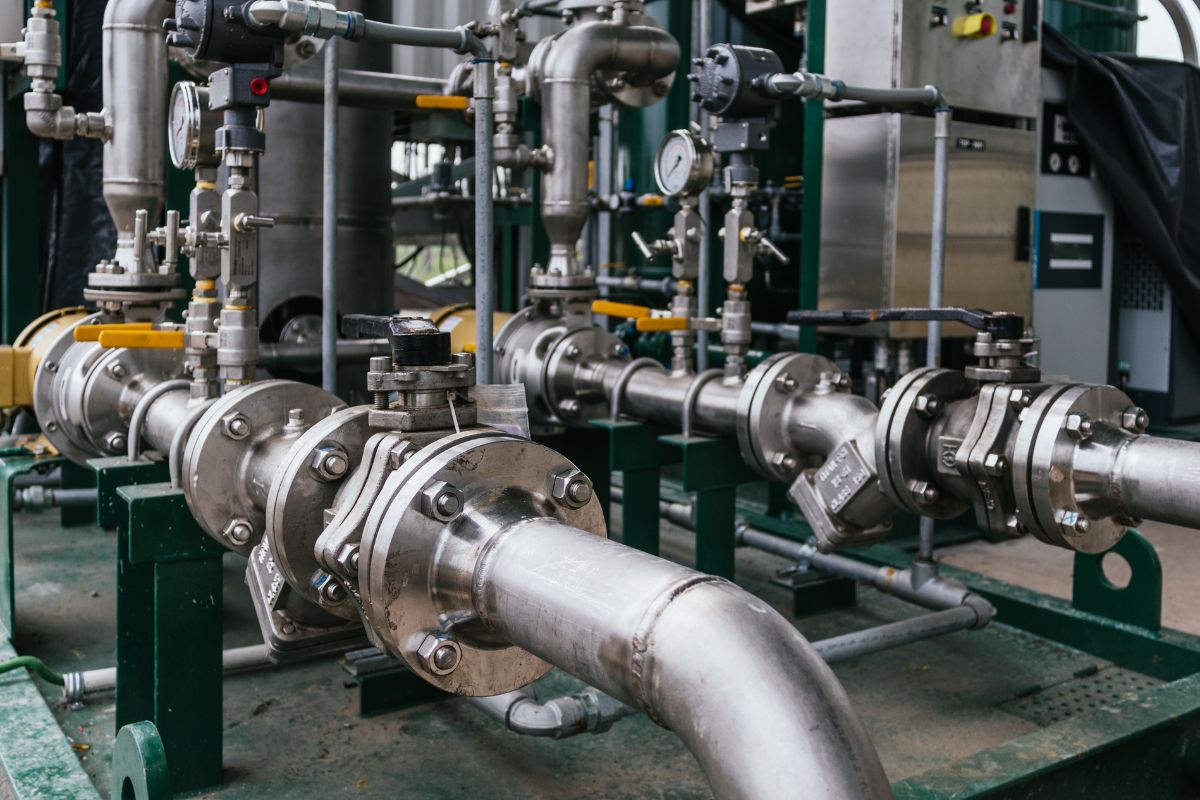
CF8M investment casting is the workhorse corrosion-resistant grade for valves, pumps, and process equipment. For CF8M castings with full traceability, explore Uni Deritend’s investment casting and testing and quality capabilities, or read this stainless steel reference.
Frequently Asked Question on
CF8M Investment Casting
CF8M is the ACI designation for cast 316 stainless steel, containing chromium, nickel, and 2 to 3% molybdenum. The molybdenum gives CF8M investment casting strong resistance to pitting and chloride corrosion.
Essentially none in chemistry. CF8M is the cast, foundry (ACI) form of 316 stainless steel, while 316 is the wrought designation for the same alloy family.
CF8 cast stainless steel is cast 304 with no molybdenum. CF8M adds 2 to 3% molybdenum, giving much better resistance to pitting and chlorides.
Choose CF3M in the CF8M vs CF3M casting decision when parts are welded. CF3M's low carbon limits carbide precipitation and protects corrosion resistance in the weld zone.
CF8M investment casting is commonly specified under ASTM A351, A743, and A744 for corrosion-resistant castings used in valves, pumps, and process equipment.
Yes. Uni Deritend, founded in 1977 and AS9100 and IATF 16949 certified, exports CF8M investment casting to global OEMs with full traceability and testing.
👉 Get Quote on WhatsApp