
Radiographic Testing of Castings: NDT Methods Guide
How to Select the Right Corrosion-Resistant Alloy for Your Casting
**Corrosion Resistant Casting Alloys** are critical for industrial applications where materials must withstand acids, seawater, and harsh chemical environments.Corrosion never sleeps. Every moment of every day, chemical forces work to return engineered metals to their natural oxide states. The difference between a component that survives decades of service and one that fails catastrophically within months often comes down to a single decision: alloy selection for chemical resistance. At Uni Deritend, we’ve spent over 50 years helping engineers navigate the complex world of corrosion-resistant alloy selection, turning potential failures into lasting successes.
This section provides practical guidance on selecting Corrosion Resistant Casting Alloys, helping engineers quickly identify suitable materials for various chemical and marine environments.
How to Evaluate and Choose the Right Corrosion Resistant Casting Alloys
Selecting the right Corrosion Resistant Casting Alloys requires a systematic evaluation of the environment, understanding relevant corrosion mechanisms, reviewing material performance, and considering manufacturing feasibility for safe, reliable components.
Successful alloy selection is not about finding the “best” material in some abstract sense—it’s about identifying the most cost-effective material that reliably survives the specific environment your component will face. This requires a systematic approach that considers corrosive agents, temperature, physical conditions, corrosion mechanisms, and practical manufacturing factors.
Skipping steps in this process leads to two types of costly errors: selecting materials that fail in service, or over-specifying expensive alloys when less costly alternatives would perform adequately. Both mistakes are common and both are avoidable with proper engineering discipline.
Step One in selecting Corrosion Resistant Casting Alloys is defining the complete corrosive environment. Engineers must account for all chemicals, trace contaminants, temperature, flow conditions, and upset operations to ensure the chosen alloys will withstand worst-case service.
A comprehensive environmental definition must answer:
What chemicals will contact the casting? Identify all species present, not just the primary process fluid. Trace chlorides in otherwise benign solutions can initiate devastating pitting attack. Minor fluoride contamination can compromise alloys that would otherwise perform flawlessly.
What are the concentrations? Many acids become more aggressive at specific concentrations—sulfuric acid, for example, is most corrosive in the 50-70% range rather than at higher concentrations.
What are the temperatures? Corrosion rates typically double with each 10°C temperature increase. An alloy suitable at ambient conditions may fail rapidly at process temperatures.
What are the physical conditions? High velocity increases erosion-corrosion. Stagnant conditions promote crevice attack and biofouling. Intermittent wetting can be worse than continuous immersion.
What happens during non-standard conditions? Startup, shutdown, cleaning, and upset conditions often create more aggressive exposures than normal operation. The alloy must survive the worst case, not just the normal case.
Different forms of corrosion require different alloy responses. Selecting an alloy with excellent uniform corrosion resistance provides no protection if the actual failure mode is stress corrosion cracking. Understanding which mechanisms threaten your application focuses alloy selection appropriately.
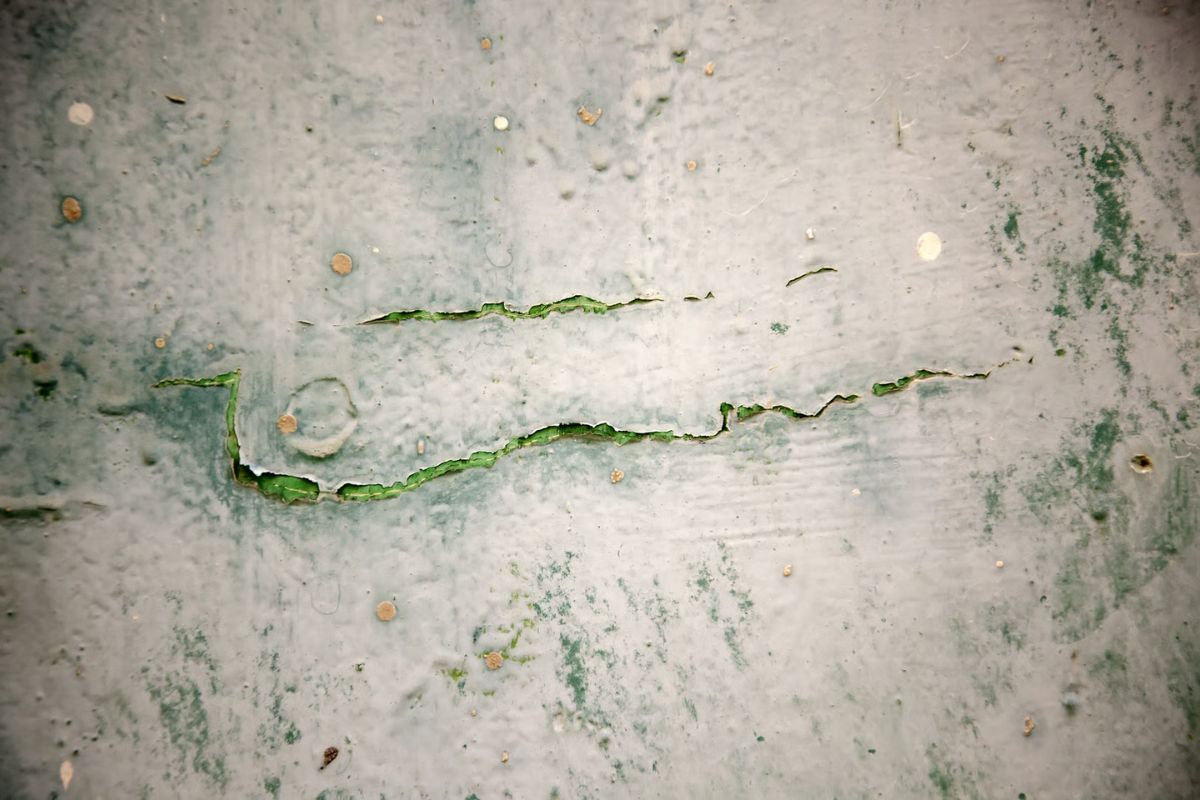
Pitting and crevice corrosion represent the most dangerous threats to stainless steels and nickel alloys in chloride-containing environments. Unlike uniform corrosion that gradually thins material predictably, pitting creates localized penetrations that can breach pressure boundaries with minimal overall metal loss.
Pitting initiates where the protective passive film breaks down—often at inclusions, scratches, or compositional variations. Once started, the pit interior becomes increasingly acidic and chloride-rich, accelerating attack while the surrounding surface remains protected. This autocatalytic nature makes pitting particularly insidious.
Crevice corrosion operates through a similar mechanism but occurs in geometrically restricted areas—under gaskets, in threaded connections, beneath deposits—where oxygen depletion disrupts passivity. Crevice attack often initiates at lower temperatures and chloride concentrations than open-surface pitting.
The Pitting Resistance Equivalent Number (PREN) provides a useful metric for comparing alloy resistance to these forms of attack:
PREN = %Cr + 3.3(%Mo) + 16(%N)
Higher PREN values indicate greater resistance. As a practical guideline, PREN > 40 is generally required for reliable seawater service.
Stress corrosion cracking (SCC) combines the effects of tensile stress, susceptible material, and specific corrosive environment to produce rapid, brittle failure. The three factors must be present simultaneously—remove any one and SCC cannot occur.
For austenitic stainless steels, chloride-containing environments at elevated temperatures present the primary SCC threat. Duplex stainless steels offer dramatically improved SCC resistance due to their mixed austenite-ferrite microstructure. Nickel alloys are generally immune to chloride SCC, making them essential for severe service.
Intergranular corrosion attacks grain boundaries in sensitized stainless steels—material that has been heated to 450-850°C long enough for chromium carbide precipitation. The chromium-depleted zones adjacent to grain boundaries become susceptible to preferential attack.
Prevention is straightforward: use low-carbon grades (L grades such as 304L, 316L) that cannot sensitize, or stabilized grades (321, 347) where titanium or niobium ties up available carbon. Proper solution annealing after welding or hot forming restores corrosion resistance in standard grades.
Connect with our experts for quick, reliable answers.
With the environment characterized and corrosion mechanisms identified, consult published corrosion data to identify candidate materials. Multiple data sources exist, from alloy producer publications to independent corrosion databases.
Acid service requires careful matching of alloy to specific acid chemistry:
| Acid | Concentration Range | Recommended Alloys | Avoid |
|---|---|---|---|
| Sulfuric Acid | All concentrations | Alloy 20, Hastelloy C-276, Hastelloy B-2 (reducing) | Standard stainless in 50-70% range |
| Hydrochloric Acid | All concentrations | Hastelloy B-2, Hastelloy C-276, Monel 400 | All stainless steels |
| Nitric Acid | Up to 70% | 304L, 316L, Hastelloy C-276 | Hastelloy B (no Cr) |
| Phosphoric Acid (Pure) | Pure acid | 316L, 317L | — |
| Phosphoric Acid (With chlorides/fluorides) | With chlorides/fluorides | Hastelloy C-276, Alloy 20 | Standard stainless |
| Hydrofluoric Acid | All concentrations | Monel 400 (unique resistance) | Stainless steels, most nickel alloys |
Seawater presents one of the most aggressive natural environments due to high chloride content, biological activity, and continuous exposure. The following seawater corrosion chart summarizes material performance:
| Alloy | Seawater Rating | Key Considerations |
|---|---|---|
| 304 Stainless Steel | POOR | Rapid pitting and crevice corrosion; avoid for immersed service |
| 316 Stainless Steel | MARGINAL | Some pitting resistance; may survive splash zones only |
| Duplex 2205 | GOOD | Adequate for many marine applications; PREN ~35 |
| Super Duplex 2507 | EXCELLENT | Recommended for full seawater service; PREN > 40 |
| Nickel-Aluminum Bronze | EXCELLENT | Traditional marine alloy; excellent biofouling resistance |
| Monel 400 | EXCELLENT | Best overall seawater resistance; long track record |
| Inconel 625 | EXCELLENT | High strength option for severe marine service |
Corrosion data identifies materials that can survive the environment; manufacturing considerations determine which can be produced practically and economically.
Not all corrosion-resistant alloys cast equally well. Some have excellent fluidity enabling thin sections and complex geometries; others require conservative design and robust feeding. Understanding these differences prevents specification of alloys that will produce excessive scrap or require design modifications.
| Alloy Type | Castability | Investment Casting Notes |
|---|---|---|
| Austenitic SS (CF8M, CF3M) | Excellent | Well-established, forgiving process parameters |
| Duplex Stainless | Good | Requires precise heat treatment for ferrite/austenite balance |
| Super Duplex | Good | More sensitive to processing; tighter controls required |
| Nickel-Aluminum Bronze | Excellent | High fluidity; excellent for complex geometries |
| Monel 400 | Excellent | Very fluid; among the easiest superalloys to cast |
| Hastelloy C-276 | Good | Good fluidity; straightforward processing |
For critical applications or unusual environments, testing validates material selection before committing to production. Testing options range from laboratory immersion testing to field coupon exposure in actual service conditions.
Standard corrosion tests provide quantitative confirmation of material suitability:
The investment in testing is modest compared to the consequences of in-service failure. When corrosion data is limited, when environments are unusual, or when failure consequences are severe, testing provides essential risk mitigation.
Experience reveals recurring errors in corrosion-resistant alloy selection:
Selecting based on cost alone. The cheapest alloy that “might work” often doesn’t. The cost of a single failure—replacement, downtime, cleanup, potential safety incidents—typically exceeds the cost differential between adequate and marginal materials many times over.
Ignoring trace contaminants. Small amounts of unexpected species can dramatically change corrosion behavior. Chloride contamination in nominally chloride-free systems causes countless unexpected failures.
Overlooking crevice geometries. Many components contain crevices—under gaskets, in threaded connections, beneath deposits—that create corrosion conditions more severe than open surfaces. The alloy must survive the most aggressive location, not just average conditions.
Designing for normal operation only. Startup, shutdown, cleaning, and upset conditions often create the most aggressive exposures. Materials that perform adequately during normal operation may fail rapidly during transient conditions.
Ignoring galvanic effects. When dissimilar metals contact in corrosive environments, galvanic acceleration can cause rapid attack of the less noble material. Consider the complete assembly, not just individual components.
Selecting the right corrosion-resistant alloy requires systematic engineering discipline: complete environmental characterization, identification of relevant corrosion mechanisms, consultation of appropriate data, consideration of manufacturing factors, and validation through testing when warranted.
The investment in proper material selection pays dividends throughout component life. Correctly specified materials deliver years or decades of reliable service; improperly selected materials generate costly failures, safety risks, and operational disruptions.
When in doubt, consult with experienced metallurgical specialists. The cost of expert guidance is trivial compared to the consequences of material failure.
Frequently Asked Question on
Corrosion-Resistant Alloy Selection
The Pitting Resistance Equivalent Number (PREN) is a key metric for Corrosion Resistant Casting Alloys, indicating how well an alloy resists pitting and crevice corrosion in chloride environments.
316 stainless steel has limited PREN (~25), making it unsuitable for continuous seawater exposure. Choose Corrosion Resistant Casting Alloys like Super Duplex, Monel 400, or Nickel-Aluminum Bronze instead.
Hastelloy C-276 is often called the "universal" corrosion-resistant alloy because its balanced chemistry resists both oxidizing and reducing environments, handles most acids, and survives chloride-containing solutions. When the chemical environment is unknown or highly variable, C-276 is typically the safest choice.
Monel 400 has unique resistance to hydrofluoric acid that is not matched by any other common engineering alloy. This makes Monel essential for HF acid systems, fluorine chemistry, and uranium processing applications.
Duplex stainless steels offer dramatically better SCC resistance than austenitic grades due to their mixed ferrite-austenite microstructure. For severe chloride exposure at elevated temperatures, nickel alloys (Inconel, Hastelloy) provide immunity to chloride SCC.
EXPERT ALLOY SELECTION FOR CORROSIVE ENVIRONMENTS
Don’t gamble with corrosion. Partner with Uni Deritend’s metallurgical team for expert guidance on corrosion-resistant alloy selection, backed by 50+ years of casting expertise and 225+ alloy capabilities.
👉 Request Alloy Selection Consultation
📞 +91 22 4968 9114 |
📧 marketing@unideritend.com
👉 Get Quote on WhatsApp