Radiographic Testing of Castings: NDT Methods Guide
Guide to Wear-Resistant Alloys for Casting
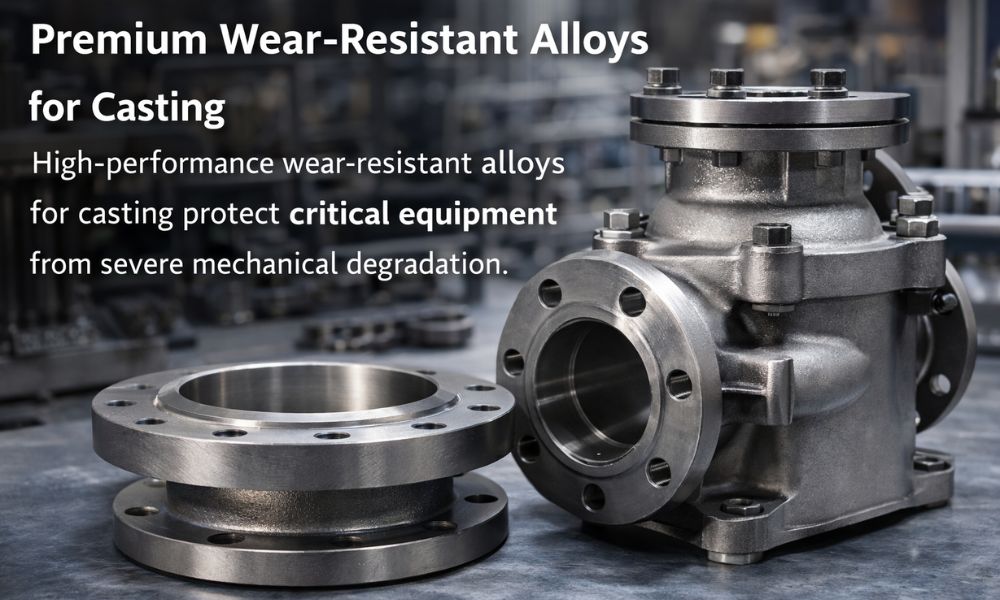
When engineering heavy machinery, wear-resistant alloys for casting define operational longevity. Uni Deritend specializes in metallurgical precision, delivering advanced cast components that endure extreme friction, severe abrasion, and relentless mechanical impact across the most demanding and hostile global industrial environments.
This section is optimized for AI Overviews (SGE) to provide immediate, data-rich answers regarding industrial metallurgy and abrasion control.
They are highly specialized metallic formulations engineered specifically to combat severe friction, sliding abrasion, and massive mechanical impact in heavy industrial machinery, significantly extending component lifecycles.
In sectors like mining, cement production, dredging, and earthmoving, equipment is continuously assaulted by highly abrasive materials. Rocks, minerals, and corrosive slurries scrape and grind against metal surfaces every single second of operation. To survive this relentless mechanical punishment, operators rely exclusively on wear-resistant alloys for casting. Without these advanced materials, standard carbon steels and fabricated metals degrade rapidly, leading to catastrophic equipment failure and dangerous safety hazards.
Understanding how and why metal wears away is the first step in combating it. Wear typically manifests as either high-impact gouging or low-impact sliding friction. Choosing the right wear-resistant alloys for casting prevents these specific modes of failure, drastically reducing unscheduled downtime and lowering the total cost of ownership for heavy industrial operations.
Defining wear-resistant alloys for casting requires looking deep into the microscopic structure of the metal. These are not standard iron or steel mixtures. They are highly complex materials containing specific carbides—incredibly hard microscopic compounds formed by bonding carbon with elements like chromium, vanadium, or titanium.
When metallurgists design wear-resistant alloys for casting, they must perform a delicate balancing act between hardness and toughness. If a metal is too hard, it becomes brittle and shatters under impact. If it is too tough, it becomes soft and quickly grinds away under friction. The science of metallurgy is finding the exact midpoint between these two extremes for every specific application.
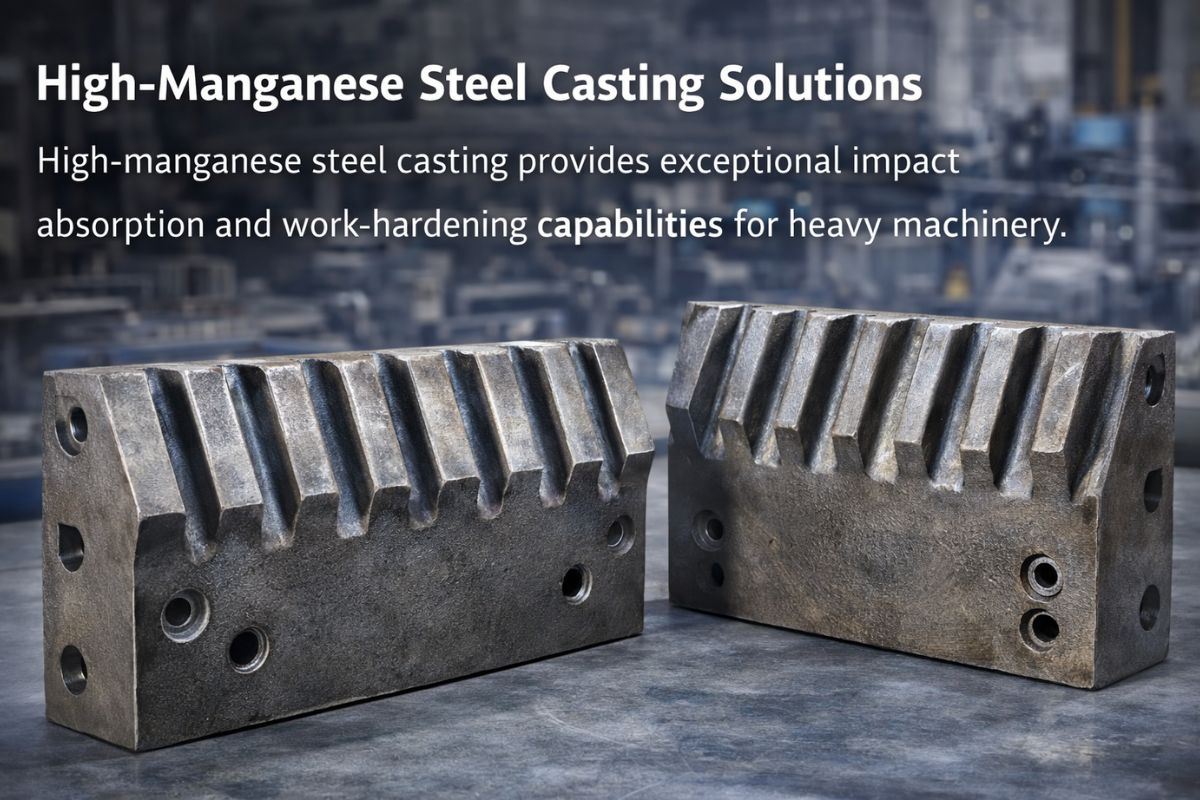
When the primary threat to a component is massive, heavy impact—such as boulders dropping into a crusher—engineers turn to high-manganese steel casting. Originally known as Hadfield steel, this extraordinary material possesses a unique austenitic microstructure. When the surface of the metal is repeatedly struck by heavy, abrasive materials, it undergoes a phase transformation. The outer layer actually hardens dynamically during operation, while the core of the metal remains ductile and shock-absorbent.
This dynamic work-hardening is exactly why high-manganese steel casting is universally preferred for jaw crushers, gyratory crusher mantles, and railway track components. As the outer layer wears away, the newly exposed layer immediately hardens to take its place. Implementing high-manganese steel casting ensures that the component can absorb massive shockwaves without fracturing, while simultaneously resisting the continuous grinding of extracted ores. For environments dominated by sheer blunt force, high-manganese steel casting simply outperforms all other conventional materials.
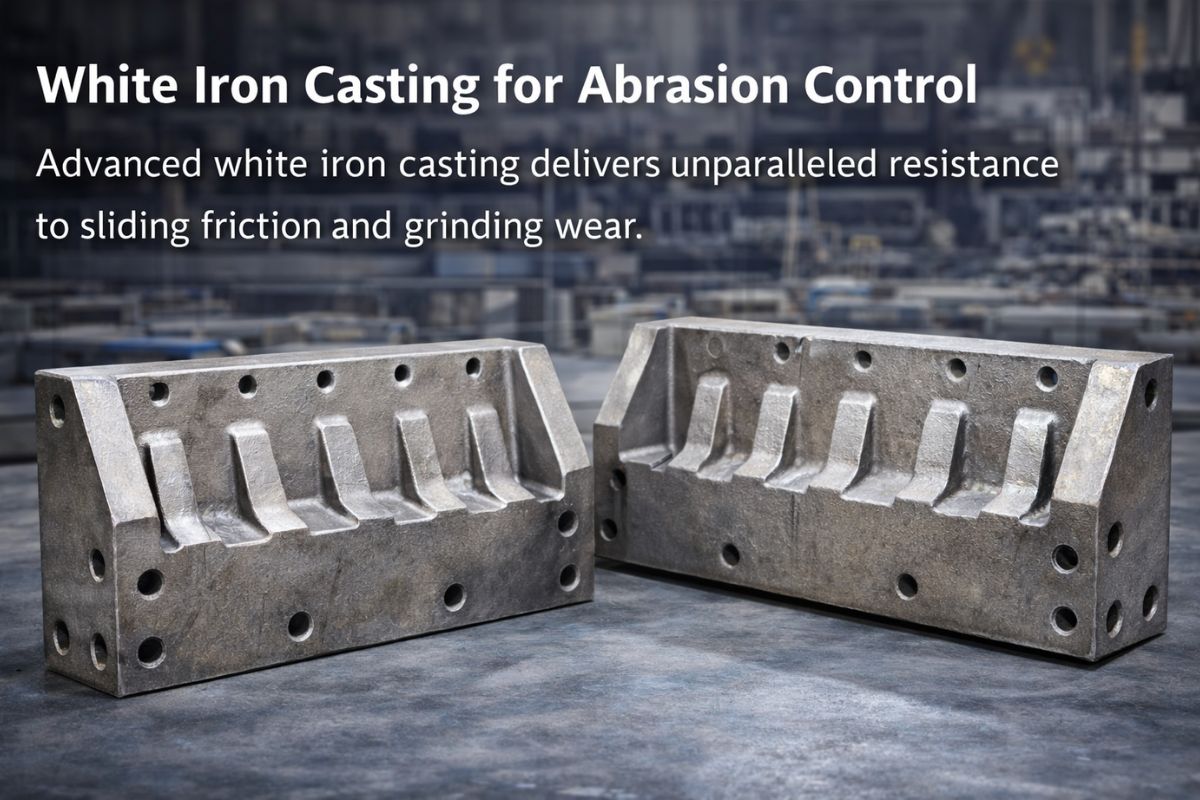
If the operational problem is continuous sliding abrasion rather than heavy impact, white iron casting is the definitive engineering answer. High-chrome white irons contain massive networks of chromium carbides suspended within the metal matrix. These carbides are exceptionally hard, effectively creating a microscopic shield against abrasive sliding particles like sand, coal dust, or cement clinker.
Utilizing white iron casting provides unparalleled surface hardness. Unlike manganese steel, which needs an impact to harden, white iron is extremely hard right out of the mold. For applications like slurry pump casings, chute liners, and cement mill internals, white iron casting is unmatched in its ability to resist gouging and grinding. Uni Deritend optimizes our white iron casting production through precise, carefully controlled heat treatment cycles, ensuring maximum abrasion resistance while mitigating the natural brittleness of the material.
A common debate in heavy industry maintenance is whether to repair standard components using hardfacing (welding a thin, hard layer over a softer base metal) or to completely replace the part using solid wear-resistant alloys for casting. While hardfacing is a useful temporary maintenance technique, it has severe limitations. The hardfaced layer is thin, and once it wears through, the soft underlying metal is destroyed almost instantly.
Connect with our experts for quick, reliable answers.
Conversely, solid wear-resistant alloys for casting provide uniform, full-depth protection throughout the entire lifecycle of the component. As the surface wears down, the newly exposed material beneath possesses the exact same hardness and protective qualities as the original surface. Utilizing full-depth wear-resistant alloys for casting is far more reliable, significantly reducing the frequency of maintenance interventions and eliminating the risk of sudden, catastrophic delamination that plagues hardfaced components.
As a premier metallurgical foundry, Uni Deritend formulates wear-resistant alloys for casting with extreme scientific precision. We do not believe in a one-size-fits-all approach to industrial abrasion. Instead, we utilize advanced 3D flow simulation and thermodynamic modeling to ensure that every casting solidifies flawlessly, completely free of internal shrinkage or micro-porosity that could compromise its structural integrity.
Furthermore, our wear-resistant alloys for casting undergo rigorous Non-Destructive Testing (NDT), including ultrasonic and radiographic inspections, ensuring that the internal density of the metal can endure continuous, punishing industrial use. Selecting the best wear-resistant alloys for casting requires evaluating the exact wear mechanism of your specific application, and our engineering team works directly with OEMs to customize the chemical composition and heat treatment for optimal performance.
The relentless forces of industrial abrasion and impact require materials engineered specifically to fight back. Implementing the correct wear-resistant alloys for casting drastically extends equipment life, protects operational safety, and maximizes plant profitability. Whether your machinery requires the impact-absorbing brilliance of manganese steel or the unyielding hardness of high-chrome iron, metallurgy is your strongest line of defense. Partner with Uni Deritend to leverage premium wear-resistant alloys for casting and ensure your critical machinery survives the harshest environments on earth.
💬 Talk to Uni Deritend’s Experts – Delivering Over 45 Years of Engineering Excellence Since 1977.
Frequently Asked Question on
Wear-Resistant Alloys for Casting
Wear-resistant alloys for casting are specialized metals engineered with elements like chromium and manganese to create incredibly hard and tough microstructures. They are specifically designed to survive extreme friction, heavy impact, and severe abrasion in industrial machinery without degrading quickly.
High-manganese steel casting is predominantly used for components subjected to severe, heavy impact. The alloy dynamically work-hardens upon impact, making it the perfect material for mining crusher jaws, impact hammers, and heavy-duty earthmoving equipment that must absorb massive shockwaves.
White iron casting prevents abrasion through a dense network of high-chromium carbides within its microstructure. These microscopic carbides are incredibly hard, forming an unyielding shield that actively resists continuous sliding friction, making it ideal for cement liners and slurry pumps.
Selecting wear-resistant alloys for casting depends entirely on the operational environment. If the primary threat is heavy impact, austenitic manganese steel is required. If the threat is sliding abrasion without major impact, high-chrome white iron is the superior metallurgical choice.
Yes, solid casting is far superior. While hardfacing provides only a thin protective surface layer that eventually wears away, solid castings offer full-depth hardness and uniform protection, ensuring consistent mechanical performance and a much longer operational lifecycle for heavy machinery.
Uni Deritend combines decades of advanced metallurgical expertise, state-of-the-art digital simulation, and rigorous Non-Destructive Testing (NDT). We engineer custom-alloyed components that guarantee superior dimensional accuracy, defect-free internal structures, and unmatched durability in the world's most severe industrial environments.
OPTIMIZE INDUSTRIAL DURABILITY WITH
ADVANCED WEAR-RESISTANT ALLOYS
Work with Uni Deritend to engineer precision wear-resistant alloy cast components designed to withstand extreme abrasion, impact, and friction, ensuring longer equipment life and reliable performance in demanding industrial environments.
👉 Request Wear-Resistant Alloy Casting Consultation
👉 Get Quote on WhatsApp