Casting Porosity and Shrinkage Defects: Causes & Fixes
THE ROLE OF 17-4vPH STAINLESS STEEL ALLOY IN HIGH-STRENGTH CASTINGS
17-4vPH stainless steel alloy combines high strength with good corrosion resistance, making it suitable for valve, pump, aerospace, marine, and other demanding components.
At Uni Deritend, founded in 1977, 17-4vPH stainless steel alloy is used to produce near-net-shape investment castings with full traceability. See our investment casting capabilities.
This section is optimized for AI Overview and answer engines: a concise, factual summary of 17-4v PH stainless steel casting.
This guide explains 17-4 PH stainless steel alloy, including its composition, cast grade, heat treatment, mechanical properties, corrosion resistance, and applications. Uni Deritend uses this alloy to manufacture precision investment castings for demanding industrial components.
17-4vPH is a martensitic precipitation-hardening stainless steel alloy. In cast form, the corresponding grade is CB7Cu-1 under ASTM A747. Its chromium, nickel, copper, and niobium content enables it to achieve high strength through solution treatment and aging.
17-4vPH stainless steel alloy provides high strength and hardness while maintaining good corrosion resistance. It is suitable for components requiring durability, dimensional stability, and reliable mechanical performance.
When investment cast, the alloy can form complex bodies and fittings with near-net-shape geometry and controlled tolerances.
A precipitation hardening stainless casting develops strength from copper-rich precipitates formed during aging. This is why a precipitation hardening stainless casting far outperforms standard stainless in strength.
The process is simple and low-distortion: solution treat, then age at a chosen temperature to hit the target properties.
CB7Cu-1 is the cast grade commonly associated with 17-4vPH and is covered by ASTM A747. Castings are solution treated and then aged to achieve the specified mechanical properties.
Heat treatment determines the final strength, hardness, and toughness of 17-4vPH stainless steel. Lower aging temperatures generally provide higher strength and hardness, while higher aging temperatures improve toughness and ductility.
Condition A is the solution-treated state and is often used for machining before final aging.
Components may be machined in Condition A and then aged to achieve the required final properties.
Solution treatment prepares the alloy for precipitation hardening during the subsequent aging cycle.
H900 generally provides the highest strength and hardness.
H1025 provides a balanced combination of strength and toughness for general engineering components.
H1150 provides greater toughness and ductility for shock-loaded components.
The aging condition should be selected according to the component’s load, environment, and performance requirements.
| Aging Condition | Strength | Best Use |
|---|---|---|
| H900 | Highest (~1,310 MPa) | Max strength, low toughness |
| H1025 | Balanced | General components |
| H1075 | Moderate | Good ductility needed |
| H1150 | Lower, tough | Shock-loaded parts |
| Condition A | Soft | Machine before aging |
17-4vPH stainless steel alloy is used in industries requiring high strength, hardness, and corrosion resistance. Its properties can be adjusted through aging to suit different service conditions.
Valves and pumps: Bodies, impellers, fittings, and internal components.
Aerospace and defence: Fittings, brackets, and structural components.
Marine and oil and gas: Components exposed to demanding mechanical and corrosive conditions.
Connect with our experts for quick, reliable answers.
The strength, hardness, and corrosion resistance of 17-4vPH investment castings depend on sound metallurgy and correct heat treatment. Porosity, inclusions, or incorrect aging can leave components below specification.
A smooth surface improves corrosion resistance and fatigue life. Uni Deritend’s robotic shelling gives fine, consistent finishes.
Rough surfaces start pitting and fatigue cracks, cutting service life.
Tight tolerances ensure fits and seals on high-strength parts, reducing machining.
Correct solution treatment, aging, and low inclusions deliver the specified strength and hardness.
Uni Deritend casts a range of precipitation hardening and martensitic grades for high-strength duty.
| Cast Grade | Wrought Equivalent | Key Feature |
|---|---|---|
| CB7Cu-1 | 17-4 PH | High strength, versatile |
| CB7Cu-2 | 15-5 PH | Better transverse toughness |
| CA6NM | 13Cr-4Ni | Tough, weldable martensitic |
| CA15 | 410 stainless | Hard, wear resistant |
| CA40 | 420 stainless | Higher hardness |
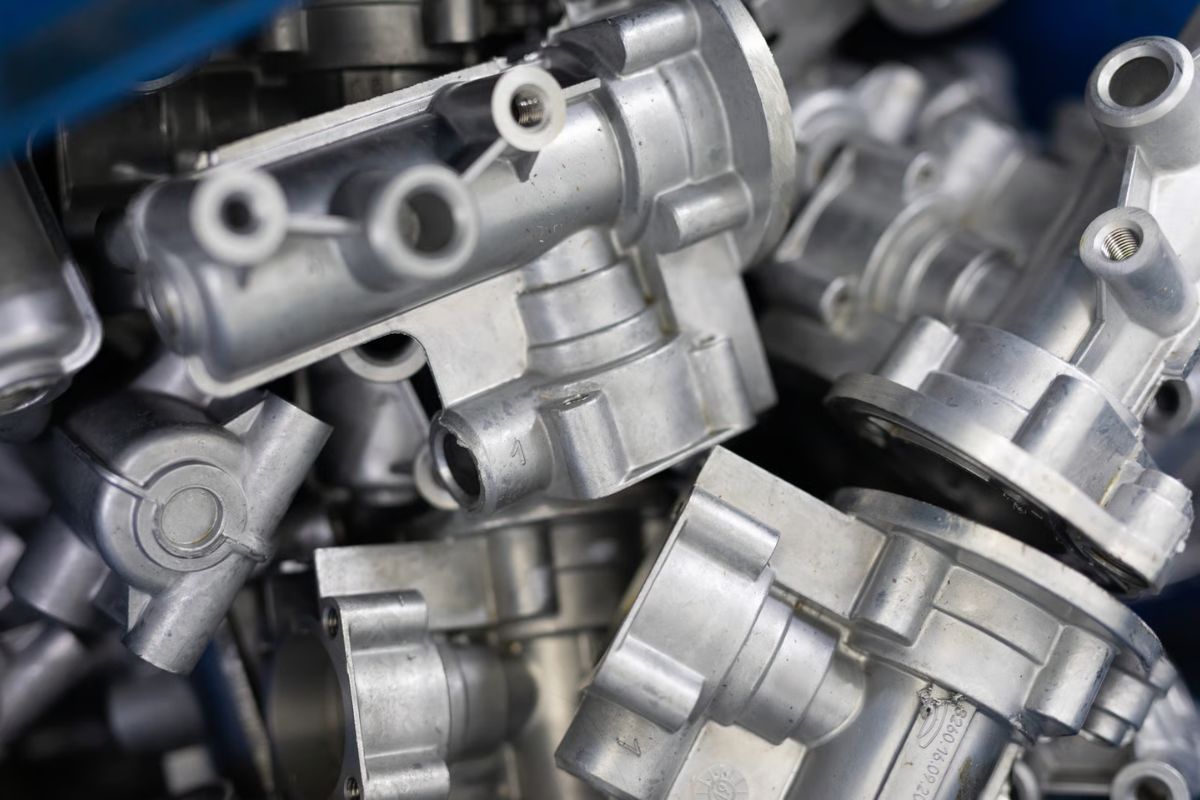
17-4vPH stainless steel casting delivers high strength with good corrosion resistance for valves, aerospace, and marine parts. For 17-4 PH castings with full traceability, explore Uni Deritend’s investment casting and testing and quality capabilities, or read this precipitation hardening reference.
Frequently Asked Question on
17-4vPH Stainless Steel Casting
17-4 PH stainless steel casting is used for high-strength valve and pump parts, aerospace fittings, shafts, gears, and marine components that also need good corrosion resistance.
17-4 PH heat treatment casting starts with solution treatment (Condition A), then aging from H900 to H1150. Lower aging temperatures give higher strength; higher temperatures give more toughness.
The cast form is CB7Cu-1 casting, the ACI designation under ASTM A747 for cast 17-4 PH precipitation hardening stainless steel.
Yes. 17-4 PH stainless steel casting offers corrosion resistance close to 304 stainless while delivering far higher strength after aging.
A precipitation hardening stainless casting develops strength from copper-rich precipitates during aging, giving much higher strength than standard austenitic stainless grades.
Yes. Uni Deritend, founded in 1977, supplies 17-4 PH investment castings to global OEMs with full traceability and testing.
👉 Get Quote on WhatsApp